L’article de Sophie Larger, chercheuse en design, paraît dans le numéro 3 (31) de la revue Kairos, consacré au thème « La mienneté du corps » sous la direction de Flora Bastiani.
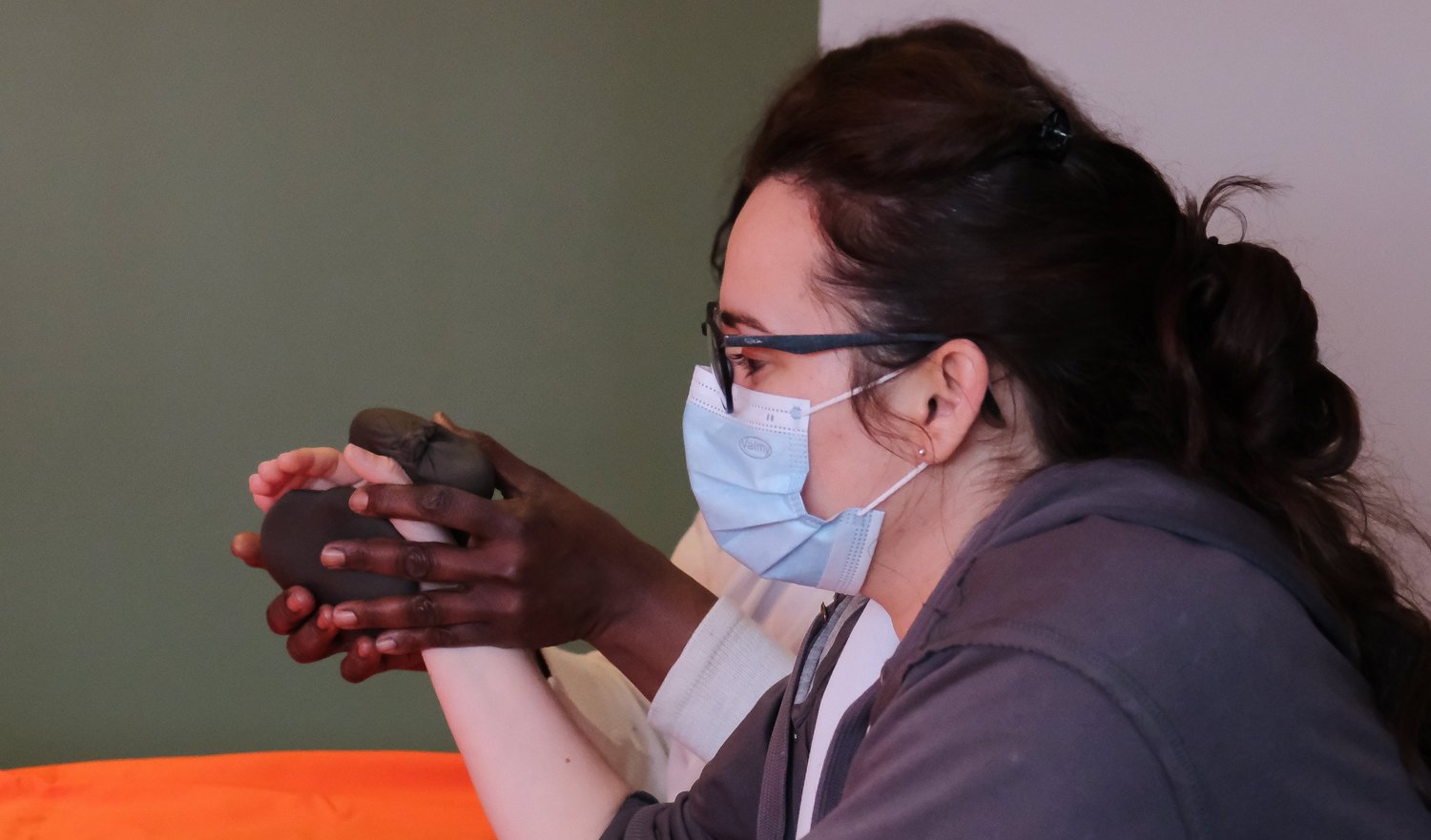
À partir d’une recherche-création menée en milieu hospitalier psychiatrique, Sophie Larger explore comment les objets et les aménagements conçus dans le cadre de la recherche Ré-confort engagent le patient dans une expérience sensorielle susceptible de recréer une continuité entre soi, les autres et son environnement.
À travers les concepts du « Moi-peau » (Anzieu, 1996), d’« objet et espace transitionnels » (Winnicott, 1971), de l’« habiter » (Heidegger, 1951) et des « hétérotopies » (Foucault, 1967), l’article interroge les conditions de l’émergence d’un corps mien, vécu comme lieu de réappropriation et d’apaisement.
Publication — Autumn 2026
An article by Sophie Larger, a design researcher, appears in issue 3 (31) of the journal Kairos, devoted to the theme “The Mineness of the Body” and edited by Flora Bastiani.
Drawing on research-creation conducted in a psychiatric hospital, Sophie Larger explores how objects and spatial arrangements developed as part of the Ré-confort research project engage patients in a sensory experience that may help restore a sense of continuity between themselves, others and their surroundings.
Through the concepts of the “Skin-Ego” (Anzieu, 1996), “transitional objects and spaces” (Winnicott, 1971), “dwelling” (Heidegger, 1951) and “heterotopias” (Foucault, 1967), the article examines the conditions under which the body can emerge as one’s own, experienced as a place of reclamation and comfort.
Pour clôturer Designs & Oppressions, nous vous donnons rendez-vous ce dimanche 27 septembre chez les Sismo pour une table ronde gratuite et ouverte à toutes et tous.
Après deux jours d’atelier entre théâtre et design, trois intervenantes partageront leurs regards, commentaires et critiques sur cette expérience collective. Nous ouvrirons ensuite la discussion sur des sujets proches de leurs parcours, que ce soit la pensée décoloniale, la solidarité internationale ou l’innovation publique.
AVEC
Inès Bel Mokhtar – Bertrand, dé-designer et pré-doctorante à l’EnsadLab, qui croise design, écologie politique et pensée décoloniale.
Shakiba DAWOD, artiste, militante et actrice associative, qui travaille à l’intersection de la création artistique, de l’engagement citoyen et de la solidarité internationale.
Anaïs TEXIER, designeuse de services publics au sein d’un lab interministériel d’innovation territoriale, qui explore de nouvelles manières d’agir en collectif.
Le tout animé par Cédric Fettouche, co-fondateur de Humanitarian Designers.
To close Designs & Oppressions, join us this Sunday, September 27, at Les Sismo for a free roundtable open to everyone.
After two days of workshops bringing together theatre and design, three speakers will share their perspectives, reflections and critiques on this collective experience. We will then open the discussion to topics connected to their work, including decolonial thought, international solidarity and public sector innovation.
WITH
Inès Bel Mokhtar – Bertrand, de-designer and predoctoral researcher at EnsadLab, whose work brings together design, political ecology and decolonial thought.
Shakiba DAWOD, artist, activist and community organizer, whose work lies at the intersection of artistic creation, civic engagement and international solidarity.
Anaïs TEXIER, public service designer at an interministerial territorial innovation lab, who explores new ways of working collectively.
Moderated by Cédric Fettouche, co-founder of Humanitarian Designers.
📢 CHANGEMENT DE LIEU — Soutenance de thèse de Natalia Baudoin La soutenance de thèse SACRe en Design de Natalia Baudoin, « Design convergent, Bricologies symbiotiques », prévue demain, vendredi 9 octobre à 14h45, se tiendra finalement à :
📍 Chimie ParisTech – PSL 11 rue Pierre et Marie Curie, 75005 Paris Amphithéâtre Moisan
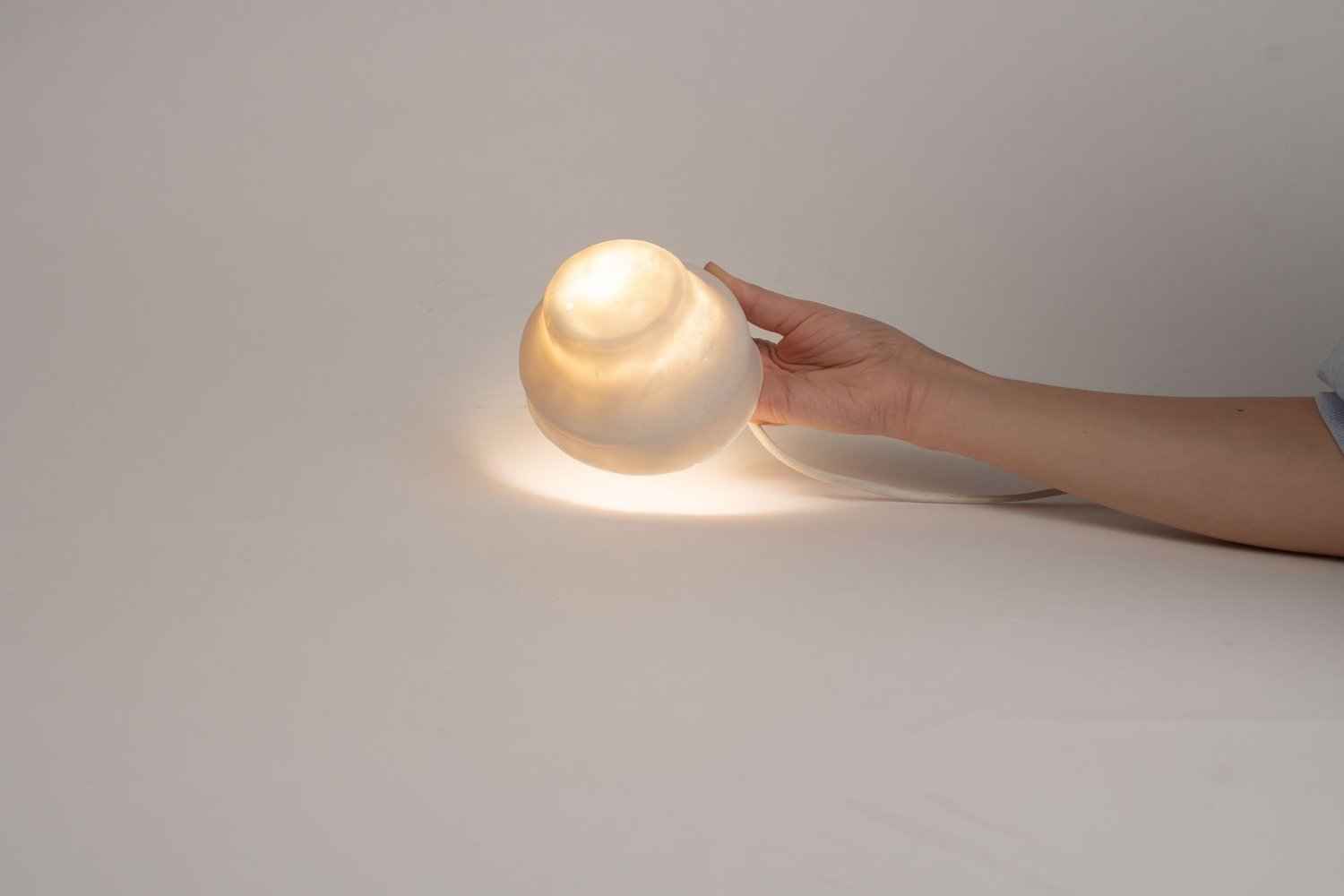
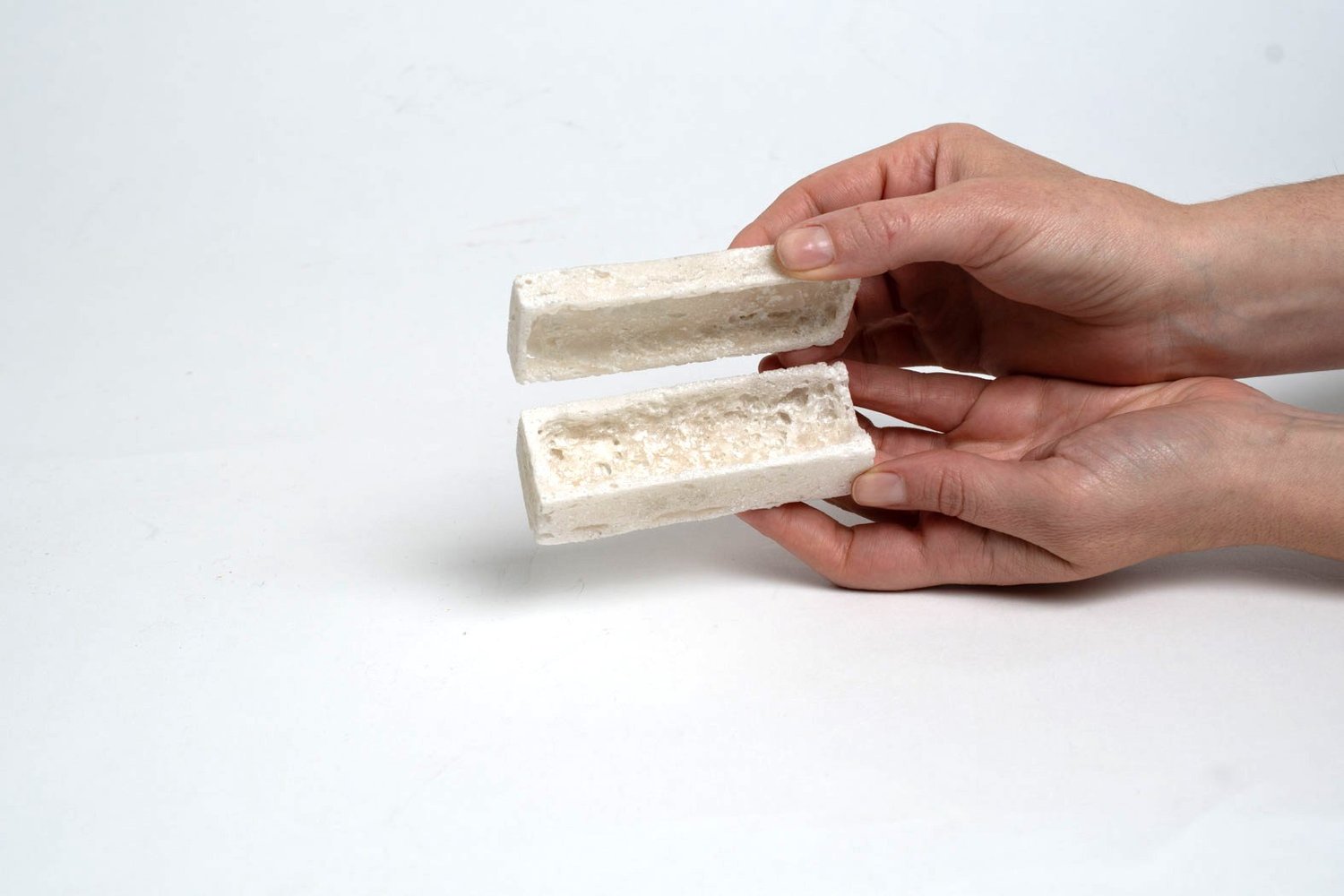
Le vendredi 9 octobre 2026 à 14h45, Natalia Baudoin soutiendra sa thèse de doctorat SACRe, mention Design, à l’École des Arts Décoratifs – PSL. Intitulée Design convergent, Bricologies symbiotiques. Une recherche par le design sur l’artisanat du sel de Bolivie, cette recherche explore les savoir-faire liés au sel du Salar d’Uyuni et les possibilités de les faire évoluer grâce au design.
La soutenance se déroulera dans l’amphithéâtre Rodin, au 31 rue d’Ulm, 75005 Paris. Elle sera également accessible à distance sur inscription.
Une recherche par le design autour de l’artisanat du sel en Bolivie
Cette thèse de doctorat par la pratique du design porte sur le Jayu Kiwakirakisa, également appelé K’acha Kachi, l’artisanat traditionnel du sel développé autour du Salar d’Uyuni, en Bolivie.
La recherche envisage cet artisanat au-delà de sa seule dimension matérielle. Elle étudie l’ensemble de l’écosystème social, culturel, économique et technique dans lequel il s’inscrit, ainsi que les cosmovisions auxquelles il est associé.
À travers une démarche de recherche par le design, Natalia Baudoin interroge les conditions dans lesquelles ces savoir-faire peuvent évoluer, générer de nouvelles formes de valeur et renforcer l’autonomie de la communauté de Colchani, tout en respectant leurs racines culturelles.
La thèse prend pour point de départ la notion de bricologie, comprise comme une manière de penser et d’agir à partir des ressources, des connaissances et des réalités disponibles. Elle fait converger plusieurs champs de recherche : le design, l’anthropologie, la microfinance, le génie des matériaux et le génie des procédés.
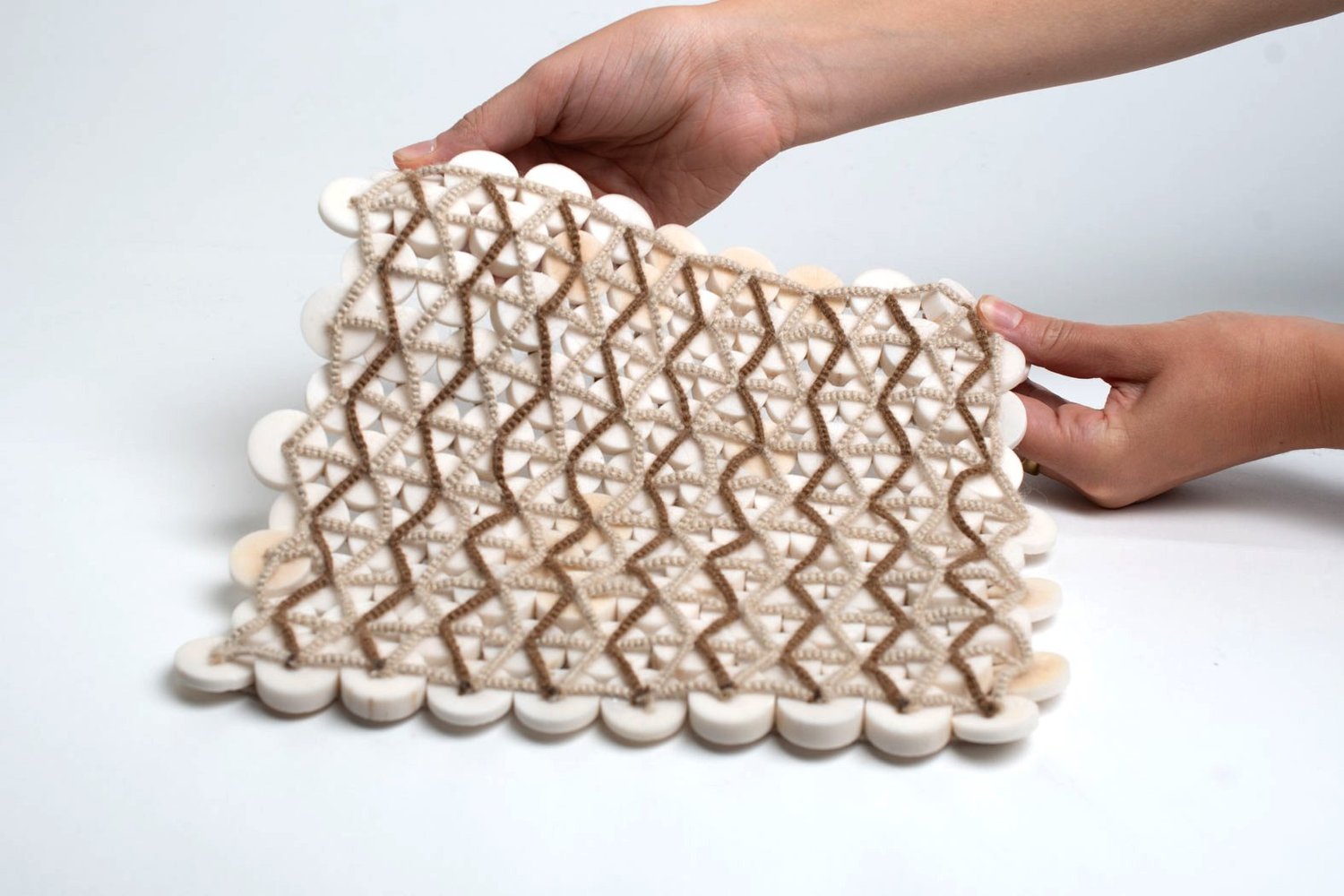
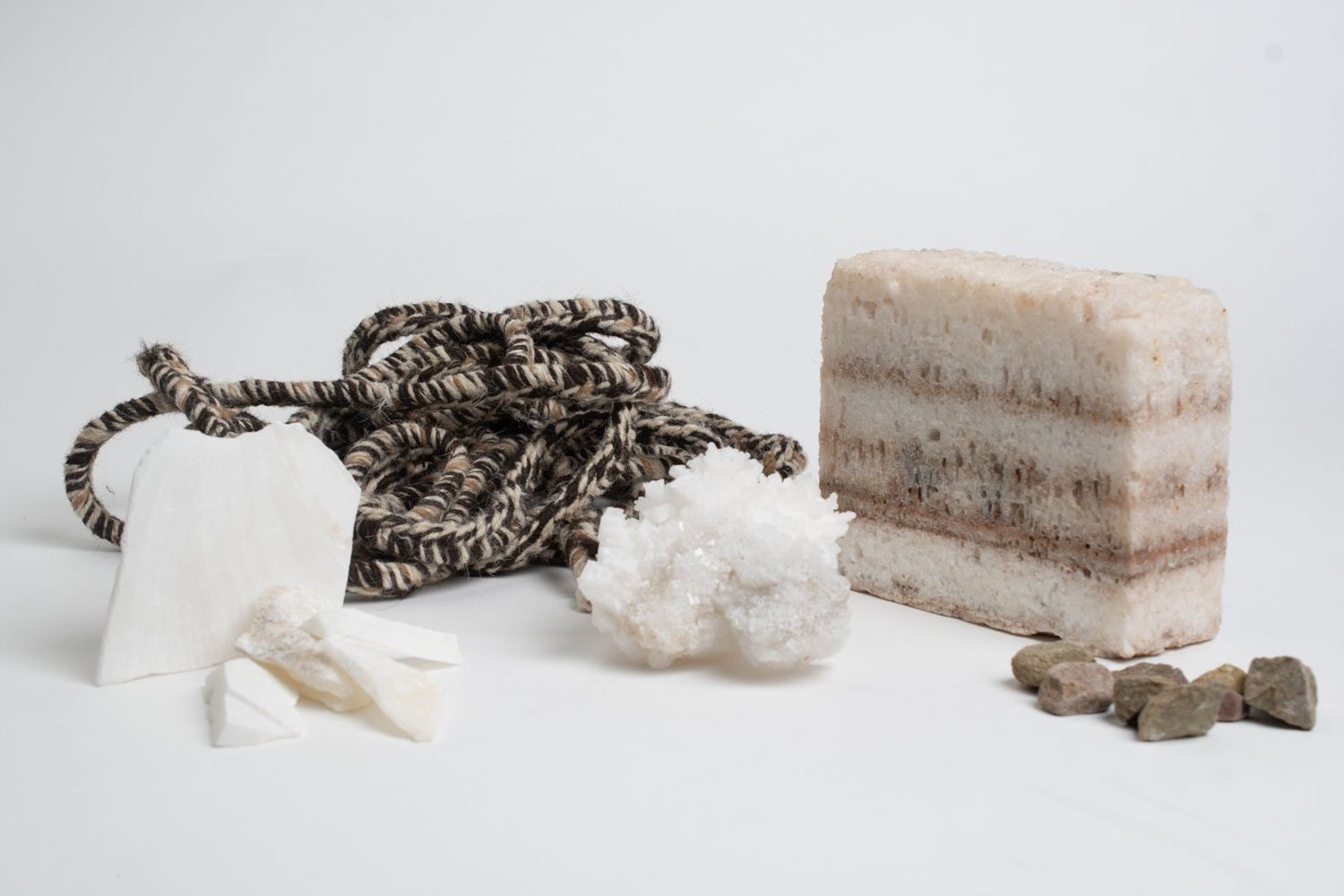
Cette approche croisée associe travail de terrain, expérimentation matérielle et échanges avec les artisans. Elle a conduit au développement de nouveaux matériaux, procédés et objets en sel destinés à la communauté de Colchani.
La collaboration entre la designer-chercheure et les artisans est ici considérée comme un espace de recherche et de création situé. Elle repose sur l’échange, l’expérimentation et l’ajustement, avec pour objectif de permettre une appropriation locale des procédés et des solutions développés.
Une exposition au Plateau Vidéo
La soutenance sera accompagnée d’une exposition présentée les jeudi 8 et vendredi 9 octobre 2026 au Plateau Vidéo de l’École des Arts Décoratifs – PSL.
Cette exposition permettra de découvrir les dimensions matérielles et expérimentales de la recherche, ainsi que les objets, procédés et pistes de réflexion issus du travail mené avec les artisans du sel en Bolivie.
L’accès à l’exposition se fera sur inscription.
Informations pratiques
Soutenance de thèse SACRe, mention Design
Design convergent, Bricologies symbiotiques. Une recherche par le design sur l’artisanat du sel de Bolivie
📍 Chimie ParisTech – PSL 11 rue Pierre et Marie Curie, 75005 Paris Amphithéâtre Moisan
Diego Landivar, rapporteur Enseignant-chercheur, Clermont School of Business
Martín Tironi, rapporteur Full Professor, Pontificia Universidad Católica de Chile
Verushka Alvizuri, examinatrice Professeure des universités, Université Toulouse – Jean Jaurès
Francesca Rizzo, examinatrice Professoressa ordinaria, Politecnico di Milano
Pascal Loiseau, examinateur Maître de conférences, Chimie ParisTech – PSL
Patrice Lecoq, invité Maître de conférences
Jean-François Bassereau, directeur de thèse Professeur, Institut Mines-Télécom Saint-Étienne et École des Arts Décoratifs – PSL
Baptiste Venet, co-encadrant Maître de conférences, Université Paris Dauphine – PSL
Cette thèse a été menée sous la direction de Jean-François Bassereau et co-encadrée par Baptiste Venet. Elle a été préparée au sein du groupe de recherche Soft Matters d’EnsadLab, dans le cadre du parcours doctoral SACRe de l’Université PSL.
Natalia Baudoin’s SACRe PhD defense in Design, “Convergent Design, Symbiotic Bricologies,” scheduled for tomorrow, Friday, October 9 at 2:45 p.m., will now take place at:
📍 Chimie ParisTech – PSL 11 rue Pierre et Marie Curie, 75005 Paris Moisan Auditorium
On Friday, October 9, 2026, at 2:45 p.m., Natalia Baudoin will defend her SACRe PhD dissertation in Design at École des Arts Décoratifs – PSL. Entitled Convergent Design, Symbiotic Bricologies: Design Research on Bolivian Salt Craftsmanship, the research explores the salt-related expertise of the Salar de Uyuni and how it might evolve through design.
The defense will take place in the Rodin Auditorium at 31 rue d’Ulm, 75005 Paris. It will also be available online upon registration.
Design Research Exploring Bolivian Salt Craftsmanship
This practice-based doctoral research focuses on Jayu Kiwakirakisa, also known as K’acha Kachi, the traditional salt craftsmanship practiced around Bolivia’s Salar de Uyuni.
The research considers this craft beyond its material dimension alone. It examines the broader social, cultural, economic, and technical ecosystem in which it exists, as well as the worldviews associated with it.
Through a design research approach, Natalia Baudoin investigates the conditions under which this expertise could evolve, generate new forms of value, and strengthen the autonomy of the Colchani community while respecting its cultural roots.
The dissertation takes the concept of bricology as its starting point—a way of thinking and acting through the resources, knowledge, and realities available within a particular context. It brings together several fields of research, including design, anthropology, microfinance, materials engineering, and process engineering.
This interdisciplinary approach combines fieldwork, material experimentation, and exchanges with craftspeople. It has led to the development of new salt-based materials, processes, and objects intended for the Colchani community.
The collaboration between the designer-researcher and local craftspeople is understood as a situated space for research and creation. It is based on exchange, experimentation, and ongoing adjustment, with the aim of enabling the local community to adopt and further develop the processes and solutions created through the project.
An Exhibition at Plateau Vidéo
The defense will be accompanied by an exhibition presented on Thursday, October 8, and Friday, October 9, 2026, at Plateau Vidéo, École des Arts Décoratifs – PSL.
The exhibition will offer visitors an opportunity to discover the material and experimental dimensions of the research, along with the objects, processes, and ideas developed through the work conducted with salt craftspeople in Bolivia.
Registration is required to attend the exhibition.
Practical Information
SACRe PhD Defense in Design
Convergent Design, Symbiotic Bricologies: Design Research on Bolivian Salt Craftsmanship
📍 Chimie ParisTech – PSL 11 rue Pierre et Marie Curie, 75005 Paris Moisan Auditorium
Diego Landivar, reviewer Research Professor, Clermont School of Business
Martín Tironi, reviewer Full Professor, Pontificia Universidad Católica de Chile
Verushka Alvizuri, examiner Professor, Université Toulouse – Jean Jaurès
Francesca Rizzo, examiner Full Professor, Politecnico di Milano
Pascal Loiseau, examiner Associate Professor, Chimie ParisTech – PSL
Patrice Lecoq, invited member Associate Professor
Jean-François Bassereau, PhD supervisor Professor, Institut Mines-Télécom Saint-Étienne and École des Arts Décoratifs – PSL
Baptiste Venet, co-supervisor Associate Professor, Université Paris Dauphine – PSL
This dissertation was conducted under the supervision of Jean-François Bassereau and co-supervised by Baptiste Venet. It was prepared within EnsadLab’s Soft Matters research group as part of the SACRe doctoral program at Université PSL.
Actes de conférence 📅 Du 17 au 20 septembre 2026 📍 Dyson School of Design Engineering, Imperial College London
Le groupe de recherche Soft Matters d’EnsadLab était bien représenté à Textile Intersections 2026, la principale conférence internationale consacrée à la recherche en design textile.
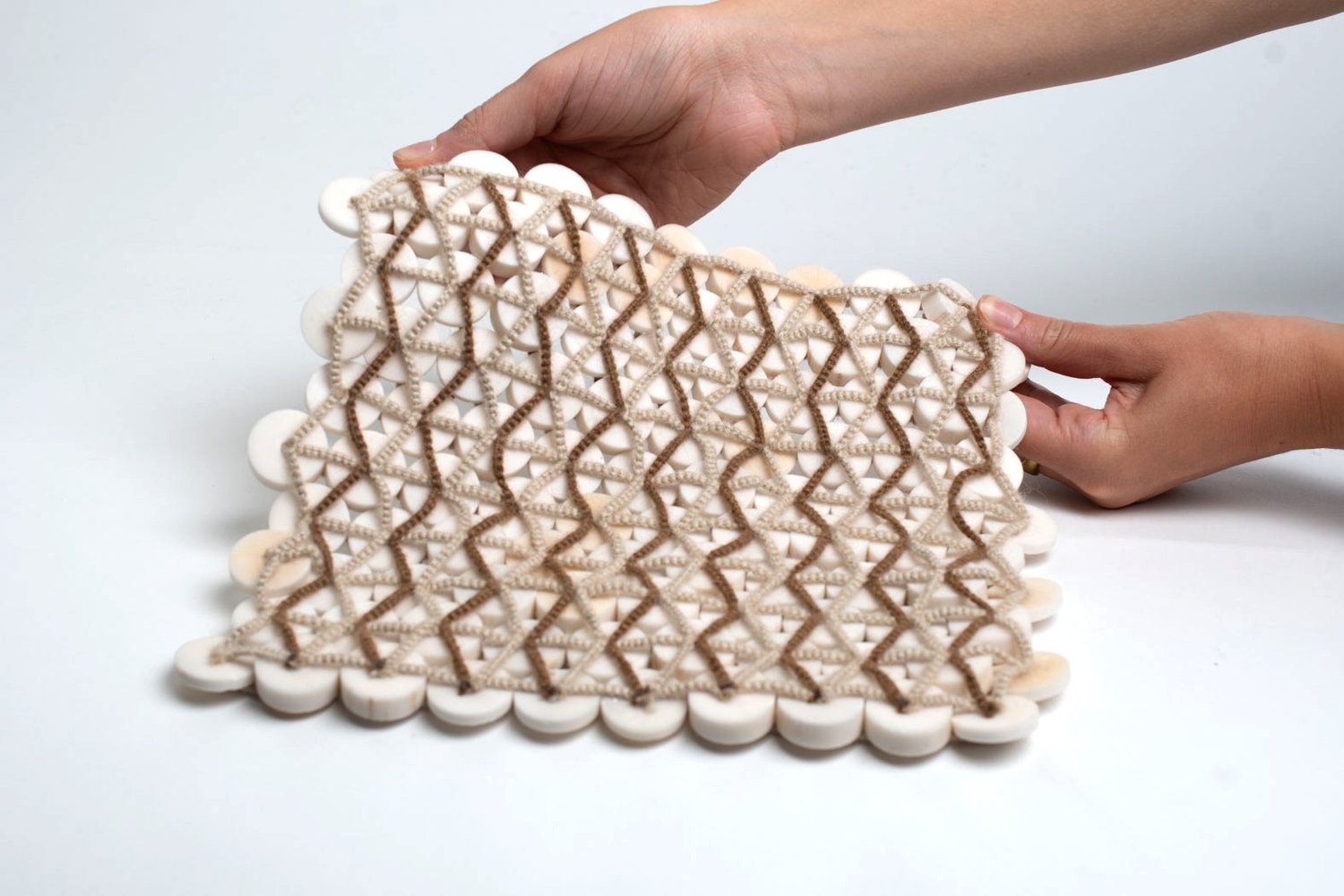
Les articles et les contributions à l’exposition de membres actuels et anciens du groupe sont désormais disponibles dans la bibliothèque numérique de la DRS. Ils portent sur les textiles évolutifs, la mousse de papier imprimée en 3D et les agencements de fils.
Voici les références complètes pour une lecture directe :
Mosse, A. et Suarez Zamora, D. (2026), « All flowers are of paper », dans : Psarra, A., Stark, L., de Koninck, S., Kunstel-Tabet, L. et Sand, K. (dir.), Material Intelligence Exhibition Catalogue, p. 2–3. https://lnkd.in/efr3RheQ
Ramage, L. et Fuzier, C. (2026), « Evolutive textiles design with the variability of natural dyes: a color-driven approach of textile design », dans Jane Scott, Sophie Skach et Rebecca Stewart (dir.), Textile Intersections 2026, 17–18 septembre 2026, Londres, Royaume-Uni. https://lnkd.in/encfsafj
Drews, J. (2026), « Including the Hybrids: The Thread Arrangement as a Lens for Manifesting Textile Designers’ Agency », dans Jane Scott, Sophie Skach et Rebecca Stewart (dir.), Textile Intersections 2026, 17–18 septembre 2026, Londres, Royaume-Uni. https://lnkd.in/ensDnPyc
Conference proceedings 📅 17–20 September 2026 📍 Dyson School of Design Engineering, Imperial College London
The Soft Matters research group at EnsadLab was well represented at Textile Intersections 2026, the leading international conference dedicated to textile design research.
Papers and exhibition contributions from current and former members of the group are now available in the DRS Digital Library. They explore evolving textiles, 3D-printed paper foam and thread arrangements.
Here are the full references for direct access:
Mosse, A. and Suarez Zamora, D. (2026), “All flowers are of paper”, in Psarra, A., Stark, L., de Koninck, S., Kunstel-Tabet, L. and Sand, K. (eds.), Material Intelligence Exhibition Catalogue, pp. 2–3. https://lnkd.in/efr3RheQ
Ramage, L. and Fuzier, C. (2026), “Evolutive textiles design with the variability of natural dyes: a color-driven approach of textile design”, in Jane Scott, Sophie Skach and Rebecca Stewart (eds.), Textile Intersections 2026, 17–18 September 2026, London, United Kingdom. https://lnkd.in/encfsafj
Drews, J. (2026), “Including the Hybrids: The Thread Arrangement as a Lens for Manifesting Textile Designers’ Agency”, in Jane Scott, Sophie Skach and Rebecca Stewart (eds.), Textile Intersections 2026, 17–18 September 2026, London, United Kingdom. https://lnkd.in/ensDnPyc
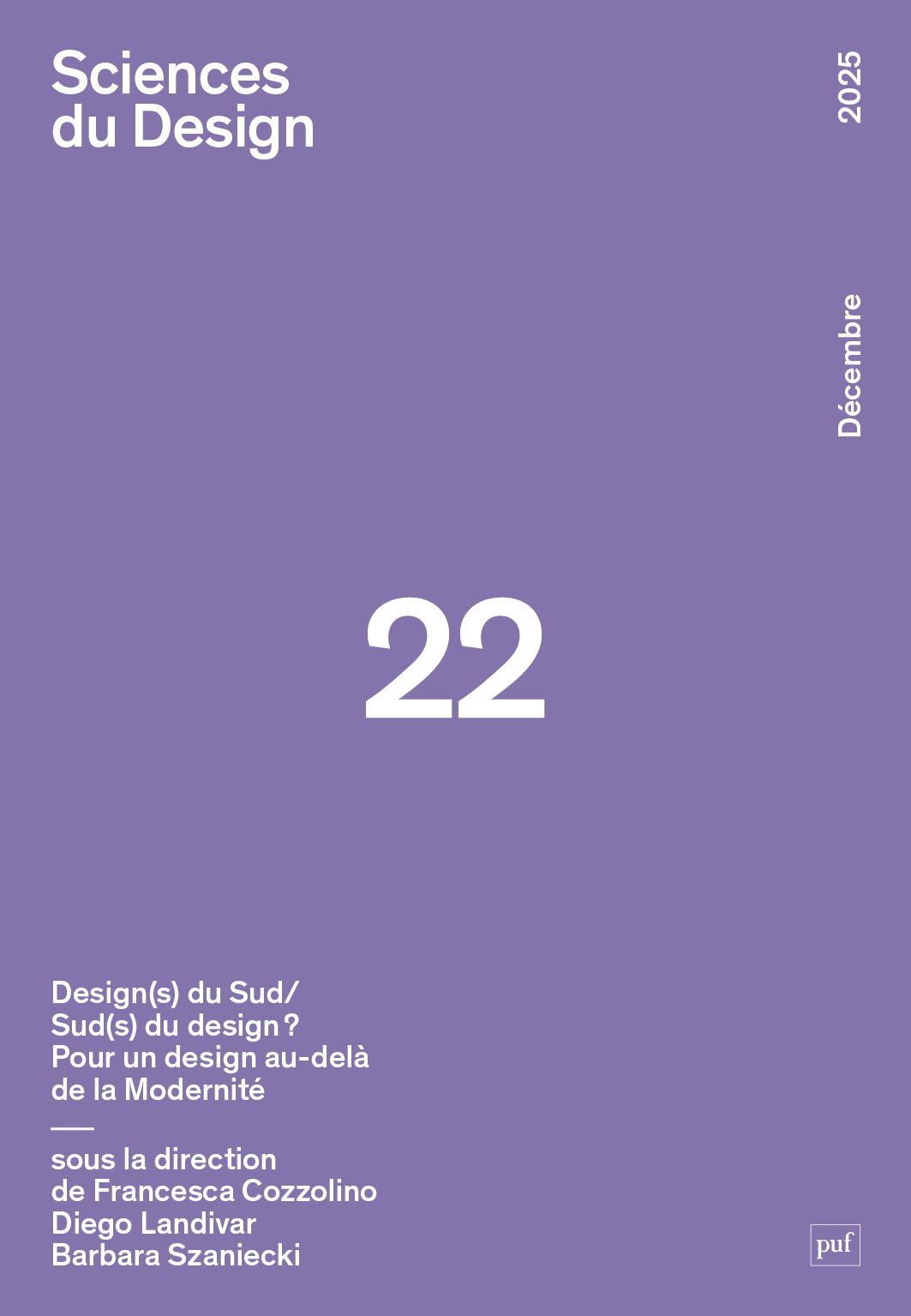
En juillet 2026 paraît le numéro 22 de la revue Sciences du design, intitulé « Design(s) du Sud / Sud(s) du design ? Pour un design au-delà de la Modernité », co-dirigé par Francesca Cozzolino, Barbara Szaniecki et Diego Landivar.
Ce numéro rassemble onze contributions qui interrogent les apports des pensées et des pratiques du design issues des Suds.
Le dossier explore les circulations des savoirs, des méthodes et des histoires du design, ainsi que les processus de repolitisation et de réappropriation du design dans une perspective décentrée de la modernité.
In July 2026, issue 22 of the journal Sciences du design, entitled « Design(s) of the South / South(s) of Design? Towards a Design Beyond Modernity », is published. The issue is co-edited by Francesca Cozzolino, Barbara Szaniecki, and Diego Landivar.
This issue brings together eleven contributions examining the contributions of design thinking and design practices emerging from the Global South.
The dossier explores the circulation of knowledge, methods, and design histories, as well as the processes of repoliticization and reappropriation of design from a perspective that decentrers modernity.
Le séminaire « Hors les murs » de la Chaire VULCA explorera les liens entre capabilités et savoirs expérientiels dans le contexte des maladies génétiques, à la croisée de la médecine, des sciences humaines et du design.
Pendant cinq jours, chercheurs, designers, médecins et doctorant·es travailleront collectivement autour des conditions concrètes permettant de rendre possibles des formes de vie soutenables. Ils interrogeront notamment les savoirs des patients ainsi que les apports de la recherche-création.
Organisé à la Fondation d’entreprise Martell, ce séminaire mêlera séances plénières, présentations de projets et ateliers d’écriture collective afin de faire émerger de nouvelles perspectives interdisciplinaires de recherche.
La restitution publique du séminaire aura lieu le 24 septembre.
📅 Jeudi 24 septembre à 18h 📍 Fondation d’entreprise Martell Réservez-ici
Créée le 1er août 2017 a pour objet la promotion de la culture, de l’innovation et de la création dans les domaines artistiques et culturel, et enfin de la recherche scientifique. La Fondation se propose d’être une plateforme professionnelle de recherche et d’expérimentation en design et un lieu public de sensibilisation et d’apprentissage tournée vers le Vivant.
Son programme s’attache à soutenir en priorité l’émergence de projets innovants à dimension régénérative. Convaincue que le design et l’art sont des leviers essentiels de transformation au sein de la société – qu’il s’agisse de créer de nouveaux imaginaires ou de concevoir de nouveaux usages – la Fondation a pour objectif de soutenir une nouvelle génération de créateurs désireux de tracer de nouvelles voies vers un avenir résilient et équitable.
The VULCA Chair’s off-site seminar will explore the connections between capabilities and experiential knowledge in the context of genetic diseases, at the crossroads of medicine, the humanities and design.
Over five days, researchers, designers, doctors and doctoral students will work collectively to examine the practical conditions that make sustainable ways of living possible. In particular, they will explore patients’ knowledge and the contributions of research-creation.
Hosted by the Fondation d’entreprise Martell, the seminar will combine plenary sessions, project presentations and collective writing workshops, with the aim of opening up new interdisciplinary research perspectives.
The seminar’s public presentation will take place on 24 September.
📅 Thursday, 24 September at 6 pm 📍 Fondation d’entreprise Martell Register here
La Fondation d’entreprise Martell
Founded on August 1, 2017, the Foundation promotes culture, innovation, artistic creation, and scientific research. It aims to serve as both a professional platform for design research and experimentation and a public space for learning about and engaging with the living world.
Its programme gives priority to emerging, innovative projects with a regenerative focus. Guided by the belief that design and art can help transform society—by inspiring new ways of imagining the world and shaping how we live—the Foundation supports a new generation of creators seeking paths towards a resilient and equitable future.
📅 19 septembre à 14h30 📍 14 ter Boulevard du Phare, 1er étage, Ault, dans la Somme
Christian Pottgiesser soutiendra sa thèse de doctorat SACRe préparée à EnsadLab, Université Paris Sciences et Lettres (PSL).
MOTIF du MOTIF
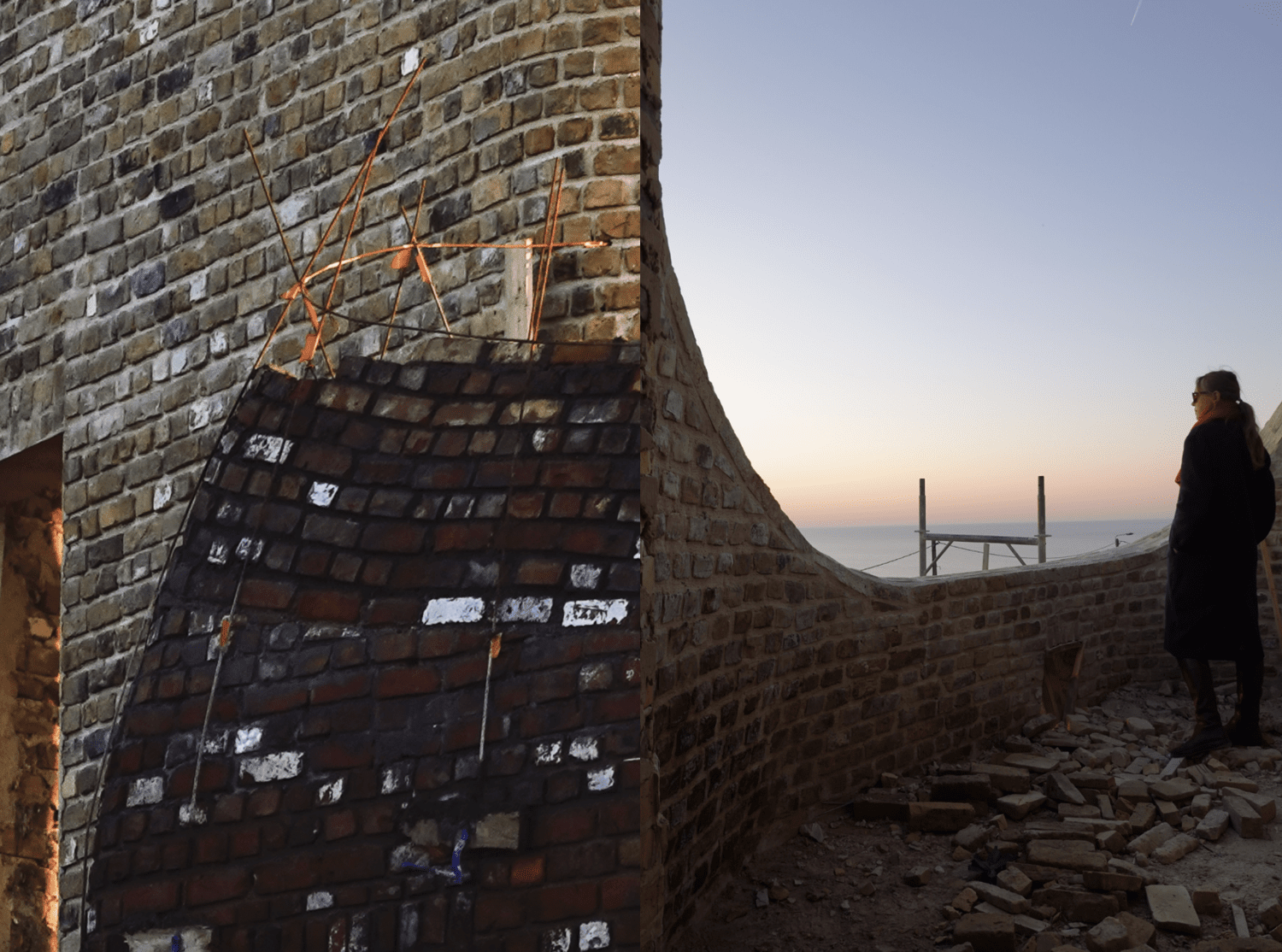
Le Mecpec, musée en chantier et programmation en cours : négocier les marges de manœuvre dans l’agir architectural.
La thèse propose la formulation du « motif du motif » pour maintenir ensemble ce que l’architecture moderne a tendu à dissocier : le motif-motivationnel, qui relève des raisons d’agir, des usages et de l’habiter, et le motif-fabricationnel, qui engage matières, formes, gestes et décisions constructives.
Ces deux dimensions ne constituent pas deux domaines qu’il faudrait ensuite articuler : programmer, c’est déjà fabriquer ; fabriquer, c’est déjà penser.
Menée depuis une posture d’architecte-praticien, la recherche met cette hypothèse à l’épreuve à Ault, à travers OLT Common Home et le Mecpec. Elle envisage l’architecture comme un processus situé de ré-emmêlement entre raisons d’agir, matières, formes, usages, usures, reprises et transformations, et défend une connaissance architecturale produite par et pour la pratique.
Une thèse de doctorat SACRe préparée à EnsadLab
Cette thèse de doctorat SACRe a été préparée à EnsadLab, Université Paris Sciences et Lettres (PSL), au sein de l’École Doctorale n° 540 (ENS-PSL) et du laboratoire Sciences Art Création Recherche (EA n° 7410).
Jury
M. Édouard FRANÇOIS, Architecte, invité
M. Alain GUEZ, Professeur Dr HDR, École nationale supérieure d’architecture Paris-Malaquais, examinateur
M. Emmanuel MAHÉ, Directeur de la recherche, Dr HDR, École des Arts Décoratifs – PSL, directeur de thèse
Mme Aïcha Liviana MESSINA, Full Professor Dr HDR, Instituto de Filosofía, Universidad Diego Portales (Chili), rapporteuse
M. Geoffrey PROMIS, Professeur des universités, Dr HDR, Université de Picardie Jules Verne, rapporteur
Mme Antonella TUFANO, Professeure des universités, Dr HDR, Université Paris 1 Panthéon-Sorbonne, examinatrice
📅 19 September at 2:30 p.m. 📍 14 ter Boulevard du Phare, 1st floor, Ault, Somme
Christian Pottgiesser will defend his SACRe doctoral thesis, prepared at EnsadLab, Université Paris Sciences et Lettres (PSL).
MOTIF du MOTIF
The Mecpec, a museum under construction and an ongoing programme: negotiating room for manoeuvre in architectural practice.
The thesis proposes the formulation of the “motif of the motif” to hold together what modern architecture has tended to dissociate: the motivational motif, which relates to reasons for acting, uses and inhabiting, and the fabrication motif, which involves materials, forms, gestures and construction decisions.
These two dimensions do not constitute two separate fields that would subsequently need to be brought together: programming is already making; making is already thinking.
Conducted from the standpoint of an architect-practitioner, the research puts this hypothesis to the test in Ault through OLT Common Home and the Mecpec. It considers architecture as a situated process of re-entangling reasons for acting, materials, forms, uses, wear, alterations and transformations, and advocates architectural knowledge produced through and for practice.
A SACRe doctoral thesis prepared at EnsadLab
This SACRe doctoral thesis was prepared at EnsadLab, Université Paris Sciences et Lettres (PSL), within Doctoral School No. 540 (ENS-PSL) and the Sciences Art Création Recherche laboratory (EA No. 7410).
Jury
Mr Édouard FRANÇOIS, Architect, invited member
Mr Alain GUEZ, Professor, PhD, HDR, École nationale supérieure d’architecture Paris-Malaquais, examiner
Mr Emmanuel MAHÉ, Director of Research, PhD, HDR, École des Arts Décoratifs – PSL, thesis supervisor
Ms Aïcha Liviana MESSINA, Full Professor, PhD, HDR, Instituto de Filosofía, Universidad Diego Portales (Chile), reviewer
Mr Geoffrey PROMIS, University Professor, PhD, HDR, Université de Picardie Jules Verne, reviewer
Ms Antonella TUFANO, University Professor, PhD, HDR, Université Paris 1 Panthéon-Sorbonne, examiner
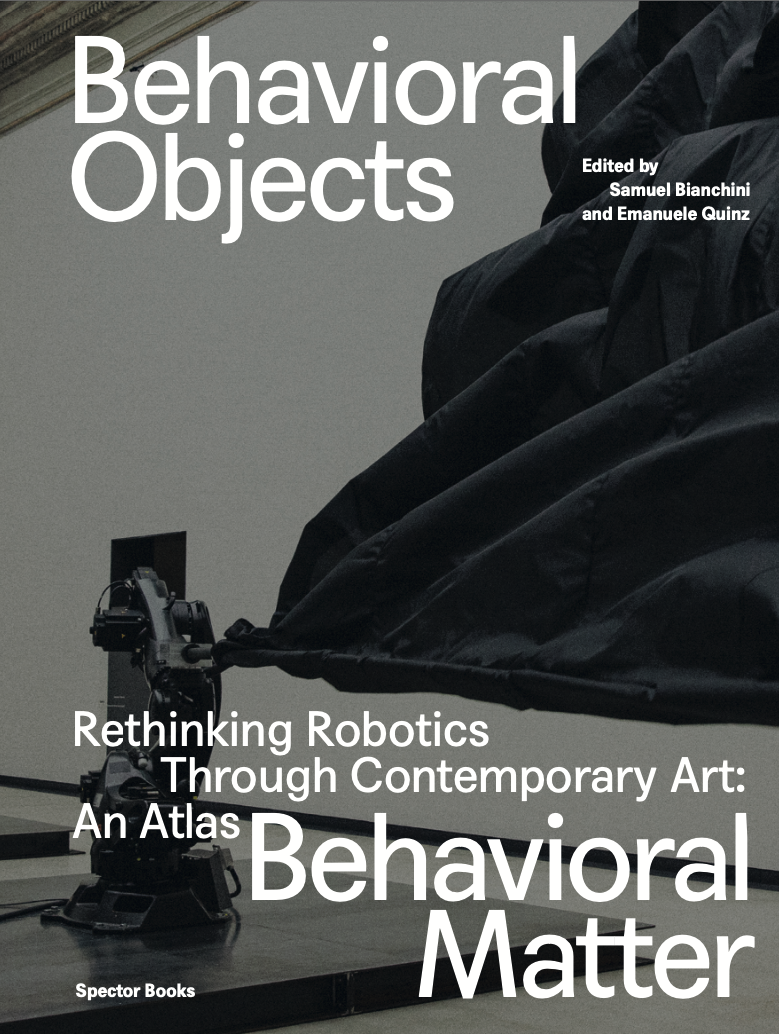
Photo : Couverture du livre « Behavioral Objects, Behavioral Matter – Rethinking Robotics Through Contemporary Art: An Atlas. »William Forsythe, Black Flags, 2014. Choreographic object. Robots, flags. Installation view, Kunsthalle im Lipsiusbau, Staatliche Kunstsammlungen Dresden (SKD), 2014. Photo: Dominik Mentzos.
📅 Jeudi 10 septembre 2026 à 18 h 30 📍 Fundação Rui Cunha, Macao
Samuel Bianchini présentera la conférence « Behavioral Objects, Behavioral Matter – Rethinking Robotics Through Contemporary Art: An Atlas » à la Fundação Rui Cunha, à Macao.
Ce titre est celui du livre que Samuel Bianchini vient de publier avec Emanuele Quinz, historien de l’art et du design, aux éditions Spector Books.
L’ouvrage repose sur plus de douze années de recherche consacrées aux « objets comportementaux ». Ces travaux ont impliqué le groupe de recherche en art et design Reflective Interaction, dirigé par Samuel Bianchini, ainsi que de nombreux partenaires issus de différentes disciplines : philosophie, robotique, informatique et intelligence artificielle, sciences cognitives, anthropologie et sciences des matériaux.
Repenser la robotique à travers l’art contemporain
Les « objets comportementaux » sont des objets robotiques d’art et de design dont les mouvements tendent à manifester des comportements. Non figuratifs, ils n’ont pas besoin d’être utiles : leur activité ne répond à aucune fonction ni à aucun usage précis.
Pourquoi un objet se déplacerait-il s’il ne doit pas accomplir une tâche ? Comment bouge-t-il lorsque sa capacité d’action, son « agency », semble venir de l’intérieur ? Comment concevoir ces formes d’action et d’animation en contradiction avec la condition première de ces objets ? Comment créer des œuvres intégrant toujours davantage la robotique souple et les matériaux intelligents ? Enfin, comment construire une relation émotionnelle et réflexive avec ces objets robotiques grâce à une dimension esthétique en action ?
À partir du travail réalisé pour le livre et de la présentation de plusieurs œuvres robotiques, dont certaines développées par Samuel Bianchini dans le cadre de ce champ de recherche, la conférence proposera des réponses à ces questions à travers une recherche fondée sur la pratique.
Une conférence animée par Samuel Bianchini
Artiste et enseignant-chercheur à l’École des Arts Décoratifs – Université PSL, Samuel Bianchini dirige des doctorats en art et en design. Vivant et travaillant à Paris, il a participé à plus de cent expositions collectives et à une vingtaine d’expositions personnelles en Europe et dans le monde.
Son travail artistique et scientifique s’accompagne d’une importante activité théorique comprenant plus de 70 textes et huit ouvrages. Il a notamment codirigé avec Erik Verhagen Practicable. From Participation to Interaction in Contemporary Art, publié par MIT Press en 2016, ainsi que Behavioral Objects, Behavioral Matter – Rethinking Robotics Through Contemporary Art, codirigé avec Emanuele Quinz et publié en 2026 par Spector Books.
En 2023, Samuel Bianchini a également fondé la revue internationale et multiplateforme de recherche par l’image .able, publiée par Actar, dont il est actuellement rédacteur en chef.
La conférence sera modérée par Carlos Sena Caires, professeur à l’USJ/FAH de Macao. L’entrée est gratuite.
📅 Thursday, September 10, 2026, at 6:30 p.m. 📍 Fundação Rui Cunha, Macao
Samuel Bianchini will present the conference “Behavioral Objects, Behavioral Matter – Rethinking Robotics Through Contemporary Art: An Atlas” at the Fundação Rui Cunha in Macao.
This is the title of the book recently published by Samuel Bianchini and art and design historian Emanuele Quinz with Spector Books.
The publication is based on more than twelve years of research dedicated to “behavioral objects.” This work has involved Reflective Interaction, the art and design research group headed by Samuel Bianchini, as well as numerous partners from various disciplines: philosophy, robotics, computer science and artificial intelligence, cognitive science, anthropology, and material science.
Rethinking robotics through contemporary art
“Behavioral objects” are robotic art and design objects whose movements tend to demonstrate behaviors. Non-figurative, they do not need to be useful: their activity has no specific function or purpose.
Why would an object move if it is not completing a task? How does it move when its capacity for action—its “agency”—seems to come from within? How can these forms of agency and animacy be designed in contradiction with the primary condition of these objects? How can works increasingly incorporating soft robotics and smart materials be created? Finally, how can an emotional and reflective relationship with these robotic objects be developed through an aesthetic dimension in operation?
Drawing on the work carried out for the book and the presentation of several robotic artworks, including some developed by Samuel Bianchini within this field of research, the conference will explore these questions through practice-based research.
A conference presented by Samuel Bianchini
An artist and teacher-researcher at École des Arts Décoratifs – PSL University, Samuel Bianchini supervises doctoral research in art and design. Based in Paris, he has participated in more than one hundred group exhibitions and twenty solo exhibitions across Europe and around the world.
His artistic and scientific work is accompanied by significant theoretical research comprising more than 70 texts and eight books. Together with Erik Verhagen, he co-edited Practicable: From Participation to Interaction in Contemporary Art, published by MIT Press in 2016. He also co-edited Behavioral Objects, Behavioral Matter – Rethinking Robotics Through Contemporary Art with Emanuele Quinz, published by Spector Books in 2026.
In 2023, Samuel Bianchini also founded .able, an international, multi-platform, image-based research journal published by Actar, of which he is currently editor-in-chief.
The conference will be moderated by Carlos Sena Caires, Professor at USJ/FAH in Macao. Admission is free.
Que se passe-t-il lorsque le design, la robotique et les structures matérielles réactives se rencontrent dans le cadre d’une coopération ouverte et pratique ?
Organisé par PolyU Design, EnsadLab-PSL, ICube et le PEPR O2R, « Matters of Behavior » est un workshop consacré à la conception d’objets animés par l’expérimentation pratique et collective.
Trois jours de workshop « Matters of Behavior »
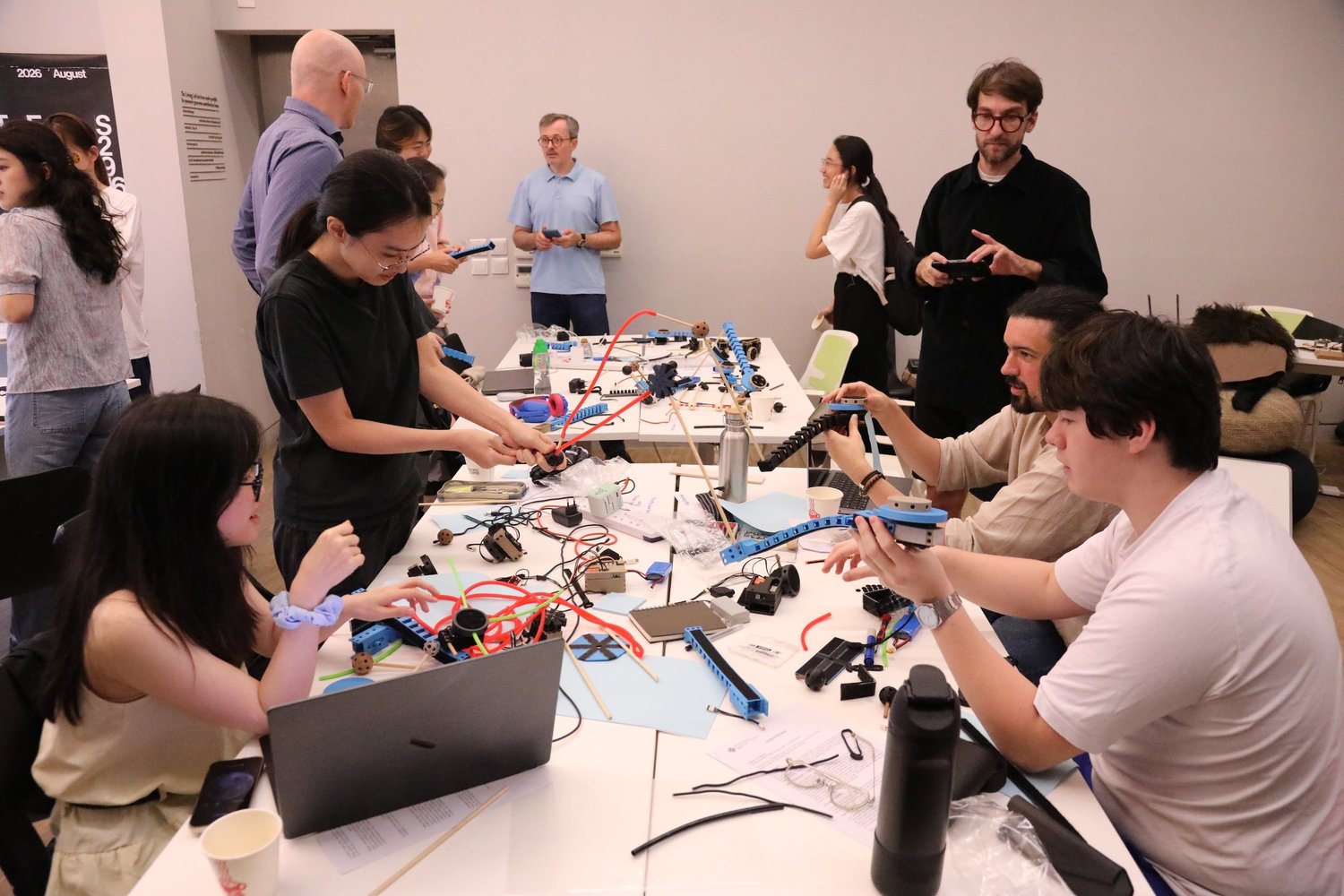
Du 2 au 4 septembre 2026, cinq équipes composées de designers, d’artistes, d’ingénieurs et de chercheurs ont créé des objets animés.
Basé sur le MisB KIT, un outil de robotique modulaire initié par EnsadLab à Paris, ce workshop pratique visait à développer les pratiques de fabrication et la compréhension de la robotique en explorant des processus logiciels comportementaux ainsi que des structures matérielles réactives, rigides et souples.
Pendant trois jours, les participants ont été invités à prototyper des « objets comportementaux » selon une méthodologie de « conception par l’expérimentation », accompagnés par des spécialistes de la robotique, des matériaux réactifs et de la fabrication collaborative.
Le workshop a été organisé et animé par Filipe Pais (EnsadLab), Samuel Bianchini (EnsadLab), Pierre Renaud (laboratoire ICube) et Luis Vega (PolyU Design), avec la collaboration de Marc Chataigner, Qiuyu Lu et Anna Zhu de PolyU Design.
Discussion ouverte et démo-exposition
📅 Mercredi 9 septembre 2026, de 16 h à 19 h 📍 Gallery B, P/F, et Living Lab (V050), G/F, PolyU Jockey Club Innovation Tower
Un événement en deux parties permettra de réfléchir aux résultats et aux implications du workshop « Matters of Behavior ».
Discussion ouverte
Cette conversation à plusieurs voix portera sur la manière dont la robotique favorise le dialogue interdisciplinaire, dont la fabrication constitue une forme de recherche et dont l’expérimentation ouverte peut façonner les approches pédagogiques dans le design et au-delà.
Intervenants : Filipe Pais (EnsadLab – École des Arts Décoratifs, Université PSL Paris et Noroff University, Norvège), Samuel Bianchini (EnsadLab) et Pierre Renaud (laboratoire ICube – INSA Strasbourg), avec les participants au workshop de PolyU et HKUST.
Hôte et modérateur : Luis Vega (PolyU Design)
📅 Mercredi 9 septembre, de 16 h à 17 h 📍 Living Lab (V050), G/F, JCIT (Block V)
Démo-exposition
Une exposition éphémère présentera les prototypes physiques créés pendant les trois jours de fabrication collaborative.
📅 Mercredi 9 septembre, de 16 h à 17 h 📍 Gallery B, P/F, JCIT (Block V)
L’événement est ouvert aux étudiants de PolyU, quel que soit leur niveau d’études, ainsi qu’aux membres du personnel. L’inscription est obligatoire avant le 8 septembre 2026. Les personnes extérieures à PolyU ayant besoin d’un code d’accès peuvent contacter Luis Vega à l’adresse luis.vega@polyu.edu.hk.
Cette initiative est rendue possible grâce au Start-up Fund for Research Assistant Professors du Strategic Hiring Scheme de l’University Grants Committee de Hong Kong et au gouvernement français, dans le cadre du Programme et équipement prioritaire de recherche Organic Robotics, financé par l’Agence nationale de la recherche au titre de France 2030.
What happens when design, robotics, and reactive material structures meet through open-ended, hands-on cooperation?
Organized by PolyU Design, EnsadLab-PSL, ICube, and PEPR O2R, “Matters of Behavior” is a workshop dedicated to designing animated objects through hands-on, collective experimentation.
Three days of the “Matters of Behavior” workshop
From September 2 to 4, 2026, five teams of designers, artists, engineers, and researchers created animated objects.
Based on the MisB KIT, a modular robotics toolkit initiated by EnsadLab in Paris, this hands-on workshop aimed to expand making practices and the understanding of robotics by exploring behavioral software processes and reactive material structures, both rigid and soft.
Over three days, participants were invited to prototype “behavioral objects” using a “designing through experimentation” methodology, guided by specialists in robotics, reactive materials, and collaborative making.
The workshop was organized and facilitated by Filipe Pais (EnsadLab), Samuel Bianchini (EnsadLab), Pierre Renaud (ICube Laboratory), and Luis Vega (PolyU Design), with the collaboration of Marc Chataigner, Qiuyu Lu, and Anna Zhu from PolyU Design.
Open discussion and demo showcase
📅 Wednesday, September 9, 2026, from 4:00 p.m. to 7:00 p.m. 📍 Gallery B, P/F, and Living Lab (V050), G/F, PolyU Jockey Club Innovation Tower
A two-part event will provide an opportunity to reflect on the outcomes and implications of the “Matters of Behavior” workshop.
Open discussion
This multi-voiced conversation will focus on how robotics fosters interdisciplinary dialogue, how making serves as research, and how open-ended experimentation can shape pedagogical approaches within design and beyond.
Speakers: Filipe Pais (EnsadLab – École des Arts Décoratifs, PSL University Paris, and Noroff University, Norway), Samuel Bianchini (EnsadLab), and Pierre Renaud (ICube Laboratory – INSA Strasbourg), together with workshop participants from PolyU and HKUST.
Host and moderator: Luis Vega (PolyU Design)
📅 Wednesday, September 9, from 4:00 p.m. to 5:00 p.m. 📍 Living Lab (V050), G/F, JCIT (Block V)
Demo showcase
A pop-up exhibition will present the physical prototypes created during three days of collaborative making.
📅 Wednesday, September 9, from 4:00 p.m. to 5:00 p.m. 📍 Gallery B, P/F, JCIT (Block V)
The event is open to PolyU students at all levels of study and staff members. Registration is required by September 8, 2026. Those who are not from PolyU and require an access code may contact Luis Vega at luis.vega@polyu.edu.hk.
This initiative is made possible thanks to the Start-up Fund for Research Assistant Professors under the Strategic Hiring Scheme of the University Grants Committee of Hong Kong and the French government, as part of the Organic Robotics Priority Research Program and Equipment, funded by the French National Research Agency under France 2030.
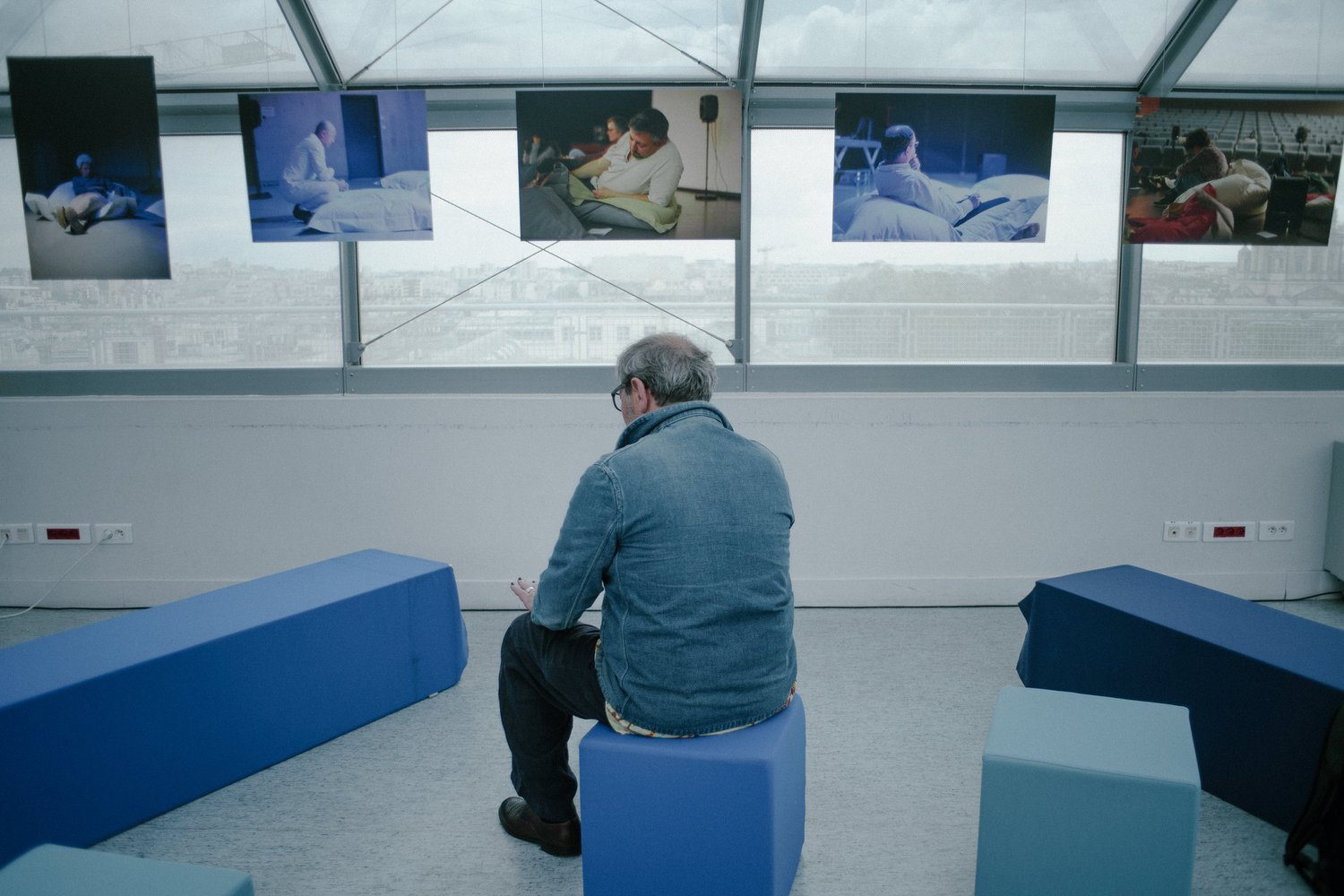
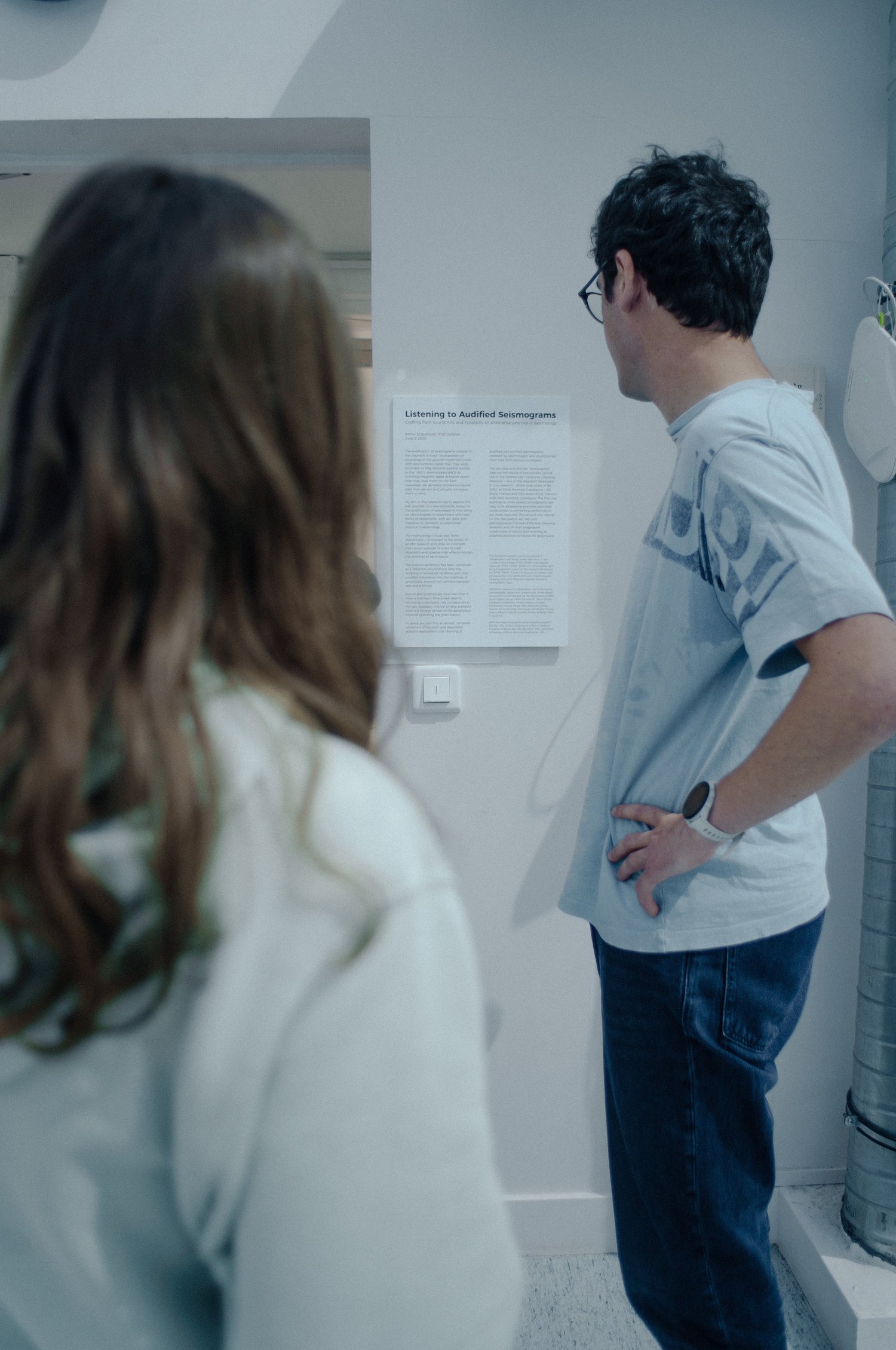
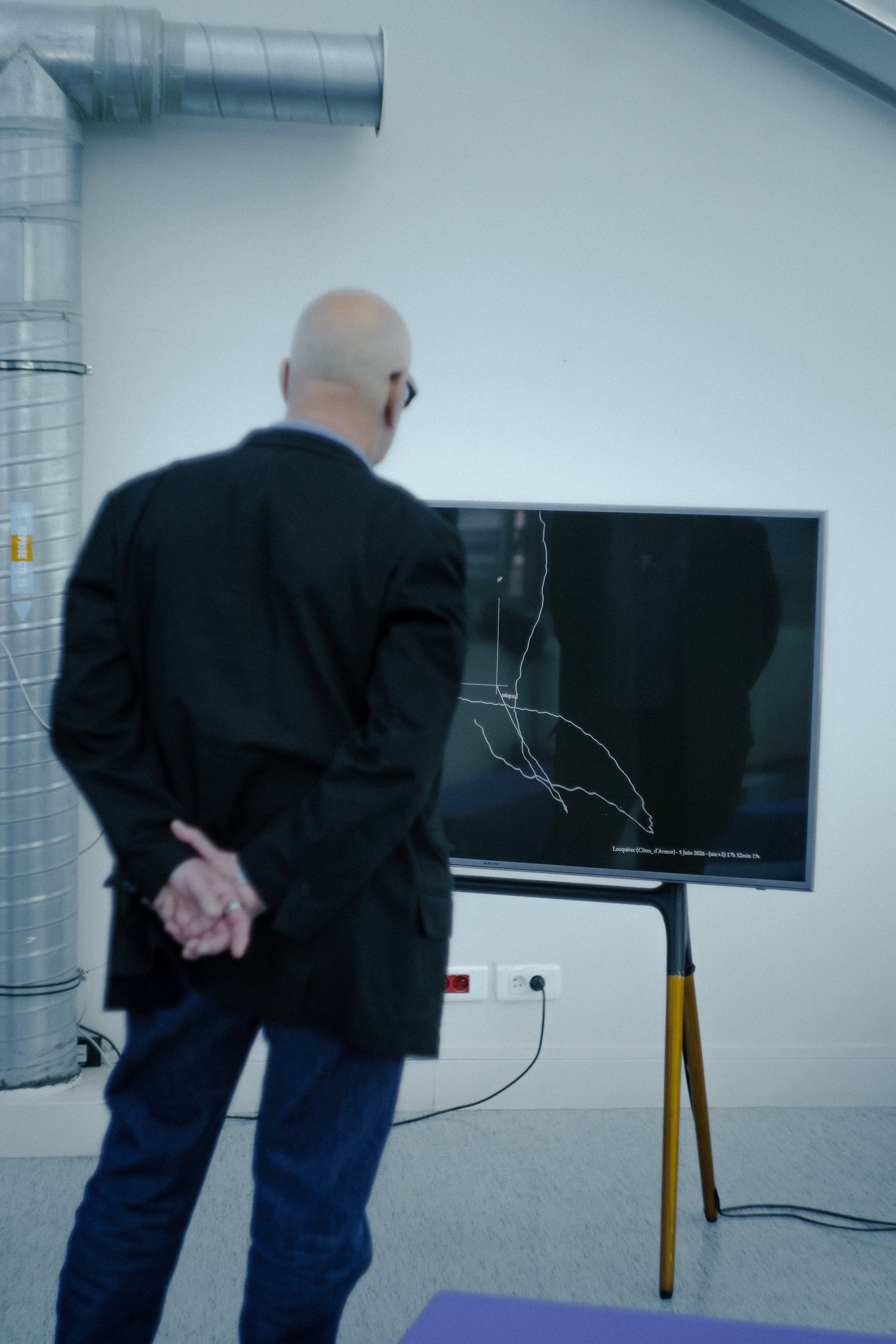
Le vendredi 5 juin, Arthur Enguehard a soutenu sa thèse intitulée Listening to Audified Seismograms: Crafting from Sound Arts and Ecosophy an Alternative Practice in Seismology, développée en codirection entre EnsadLab et le Laboratoire de Géologie de l’École Normale Supérieure – PSL.
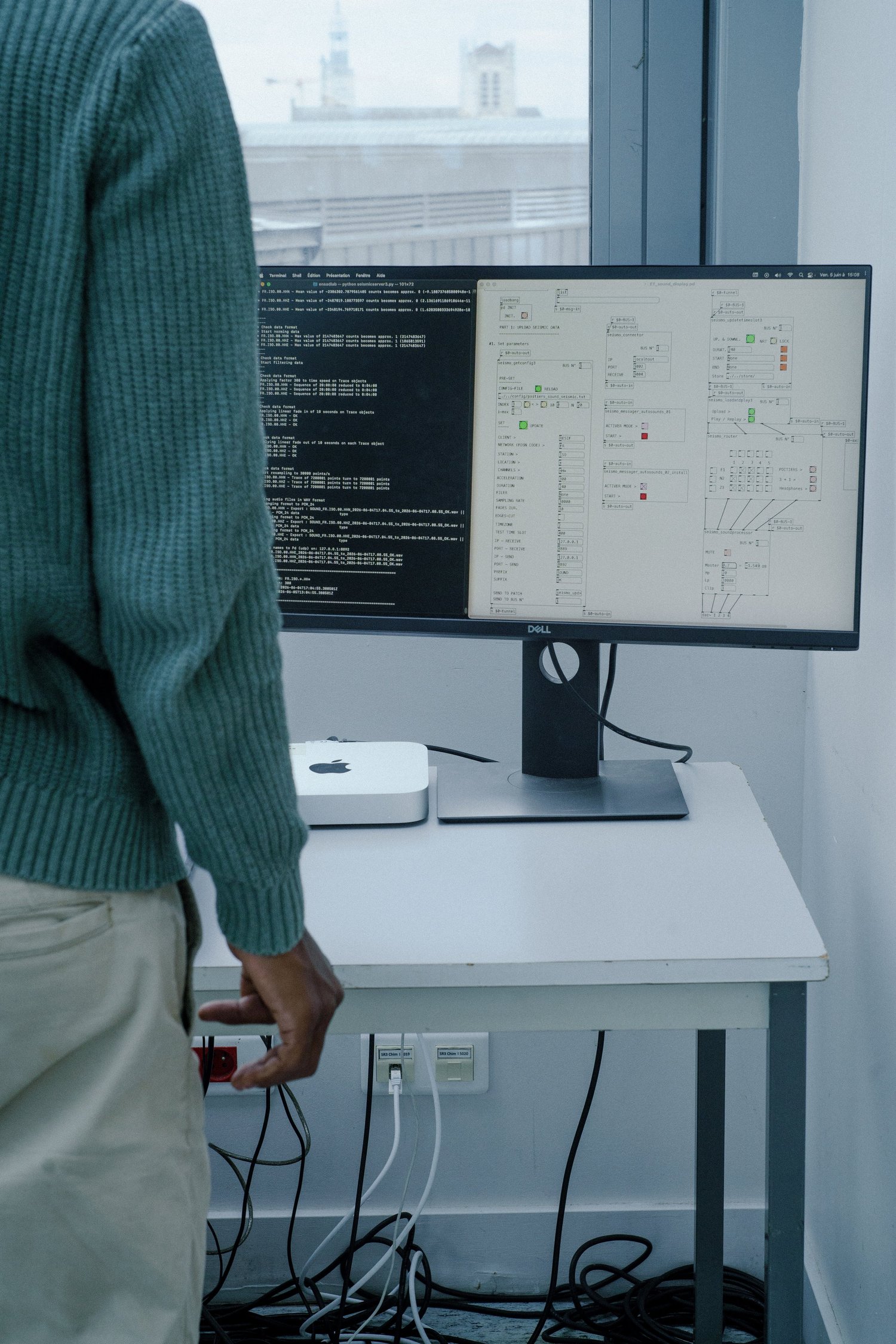
À travers cette recherche, Arthur Enguehard explore une approche alternative de la sismologie fondée sur l’écoute. Alors que cette discipline s s’est historiquement construite autour de la transcription visuelle des vibrations du sol, sa thèse étudie la manière dont l’audification des enregistrements sismiques peut contribuer à l’élaboration de nouvelles pratiques de recherche.
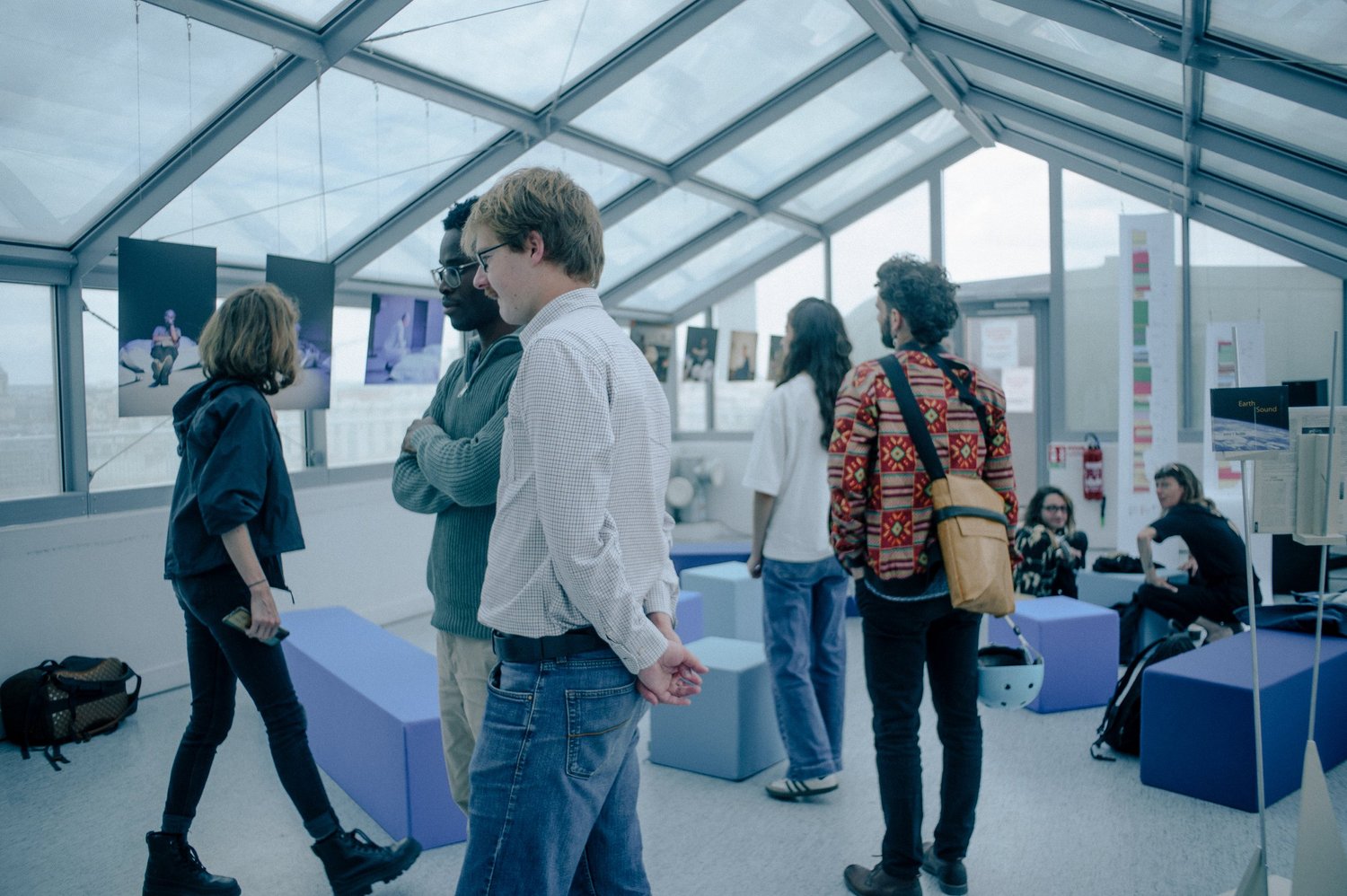
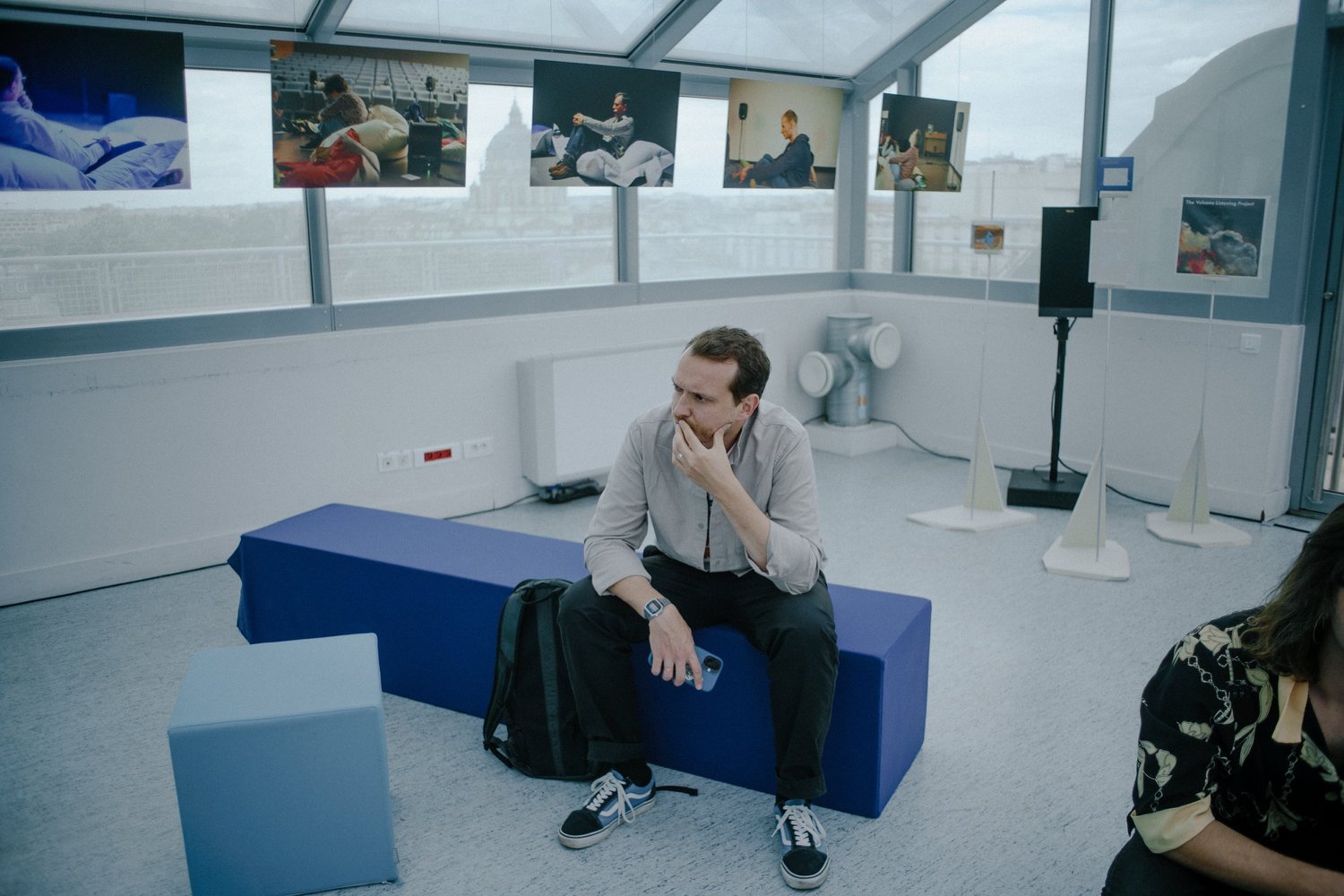
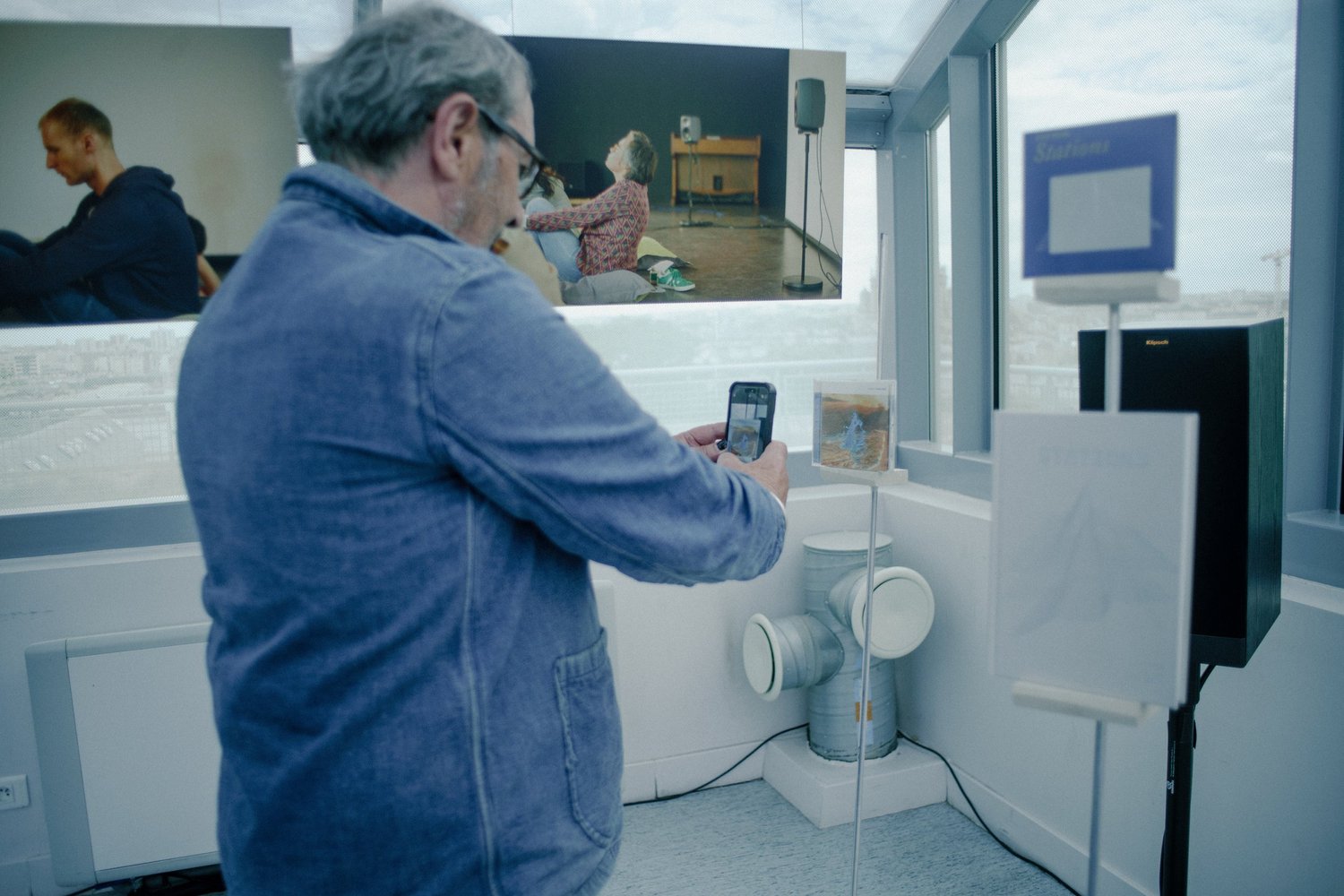
La soutenance, qui s’est dérou déroulée en anglais au Département de Géosciences de l’École Normale Supérieure – PSL, a été accompagnée d’une exposition en accès libre dans la Salle Serre.
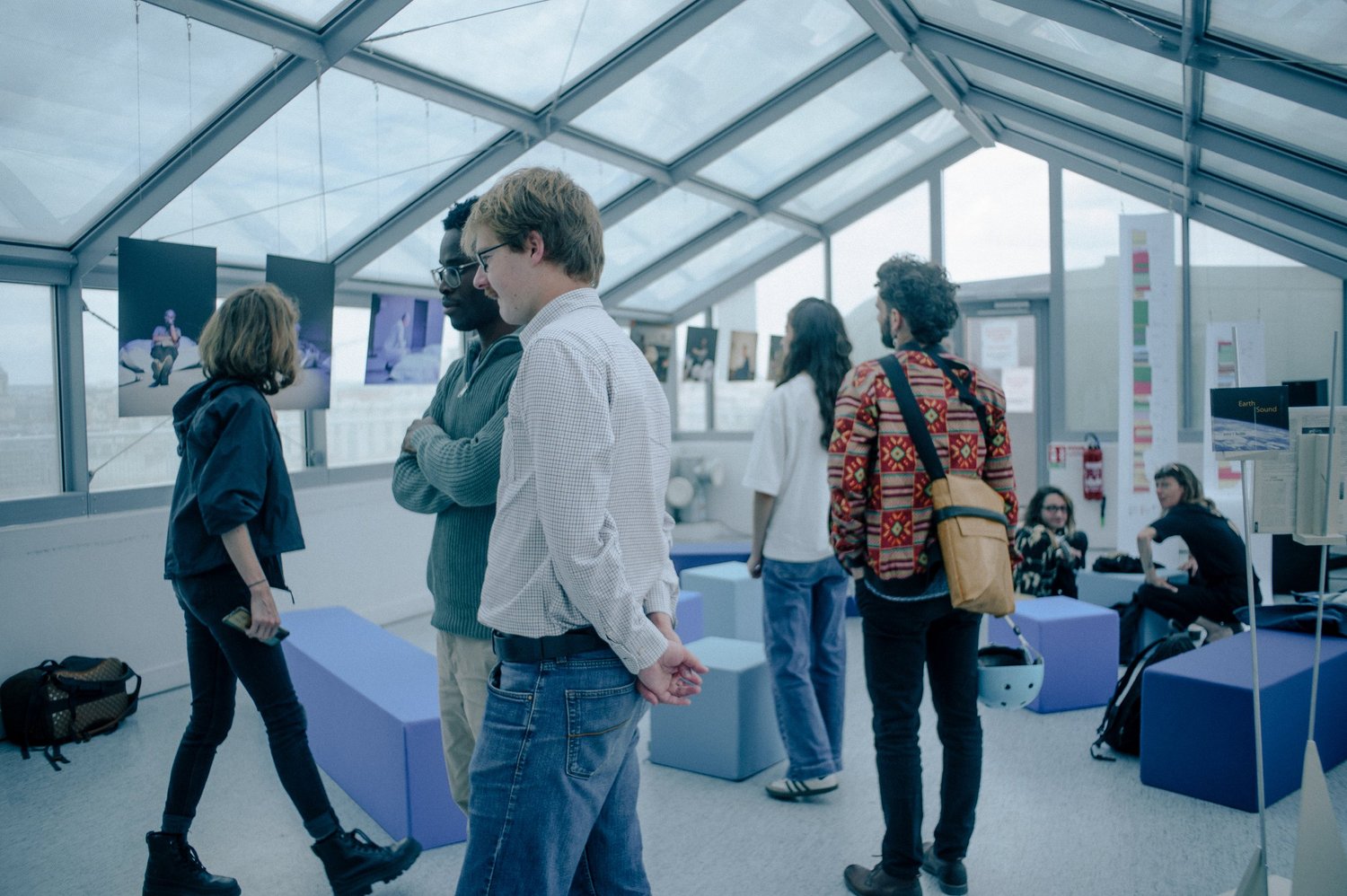
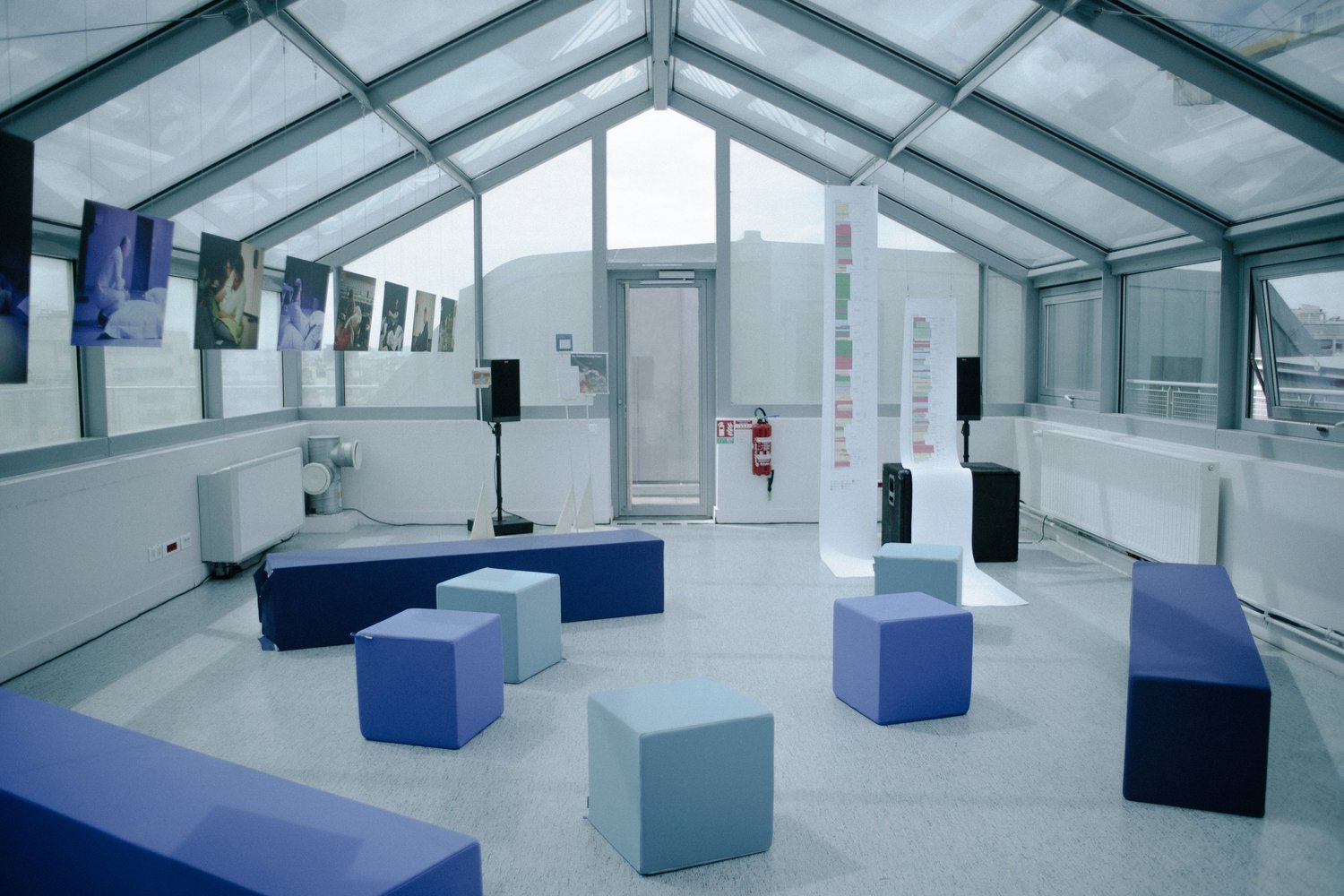
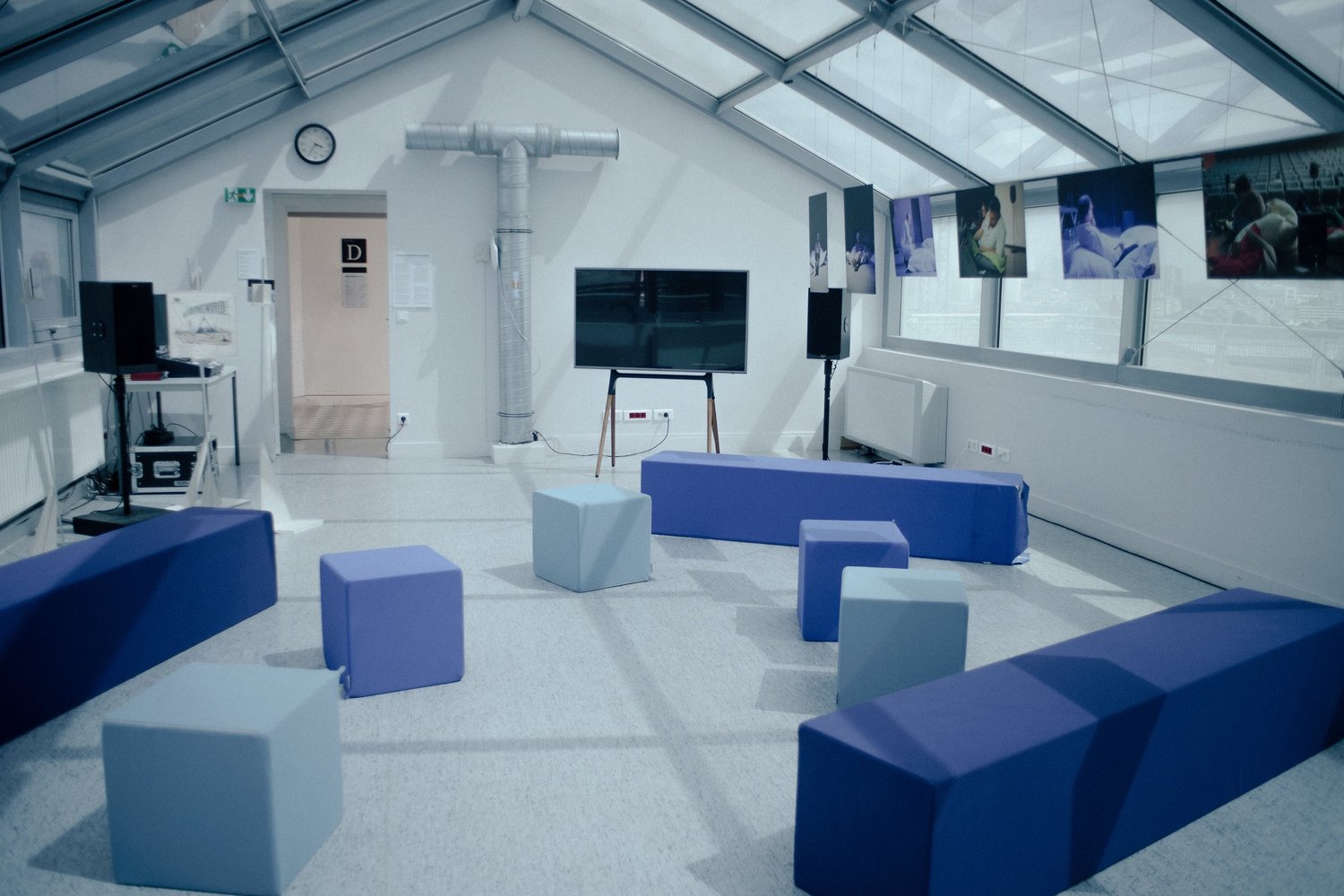
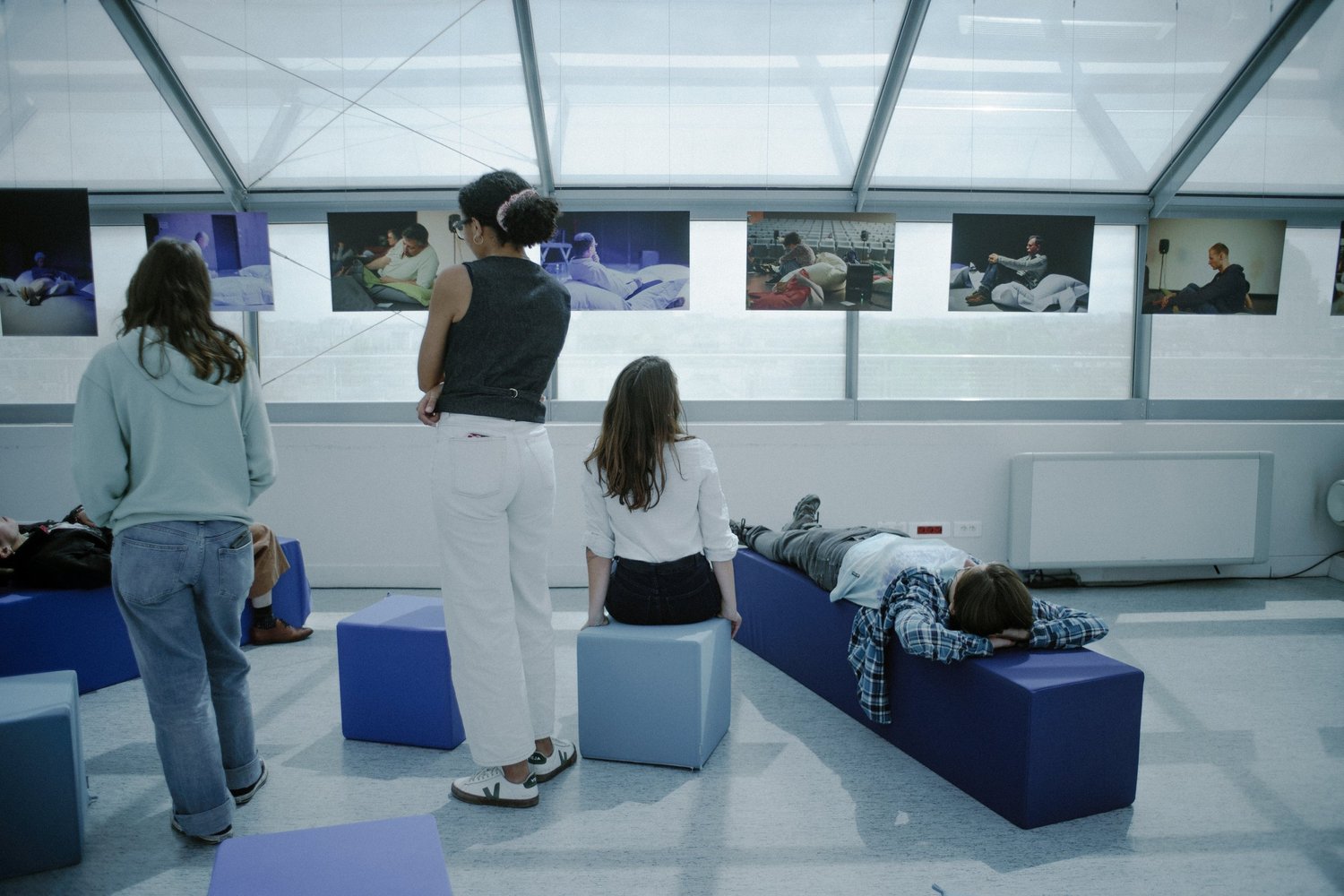
Retour en images sur cette journée consacrée à l’écoute des séismes, à la recherche et aux croisements entre arts sonores, écosophie et sismologie.
Photos : Cavaro Zoé
A Look Back in Pictures at Arthur Enguehard’s PhD Defense
On Friday, June 5, Arthur Enguehard defended his doctoral dissertation entitled Listening to Audified Seismograms: Crafting from Sound Arts and Ecosophy an Alternative Practice in Seismology, jointly supervised by EnsadLab and the Geology Laboratory of the École Normale Supérieure – PSL.
Through this research, Arthur Enguehard explores an alternative approach to seismology based on listening. While the discipline has historically developed around the visual transcription of ground vibrations, his dissertation examines how the audification of seismic recordings can contribute to the development of new research practices.
The defense, held in English at the Department of Geosciences of the École Normale Supérieure – PSL, was accompanied by a free public exhibition in the Salle Serre.
A look back in pictures at this day dedicated to listening to earthquakes, research, and the intersections between sound arts, ecosophy, and seismology.